
Bone & Joints
Gout & High Uric Acid

BHMS — Classical Homeopathic PhysicianPublished 15 Mar 2026· Updated 1 Aug 2026
Constitutional homeopathic treatment to relieve acute gout attacks, reduce serum uric acid, and prevent joint damage — addressing the metabolic root cause, not just the pain.
Overview
Gout is a form of inflammatory arthritis caused by the deposition of monosodium urate crystals in joints and surrounding tissues, triggered when serum uric acid levels remain persistently elevated. It is increasingly common in urban India, driven by rich diets, alcohol consumption, rising rates of metabolic syndrome, and the widespread use of diuretic medications.
Conventional management — colchicine for acute attacks and lifelong allopurinol — is often effective but carries side effects and does not correct the underlying metabolic tendency. At HealthKunj, constitutional homeopathic treatment is used alongside dietary guidance to reduce attack frequency, lower uric acid, and restore metabolic balance over time.
1 in 10
urban Indian men over 40 have elevated uric acid
6 mg/dL
Target uric acid level to prevent crystal deposition
98%
Patient satisfaction at HealthKunj
What Is It?
Gout occurs when uric acid — a breakdown product of purines found in many foods — accumulates beyond the kidneys' ability to excrete it. At high concentrations, uric acid crystallises in cooler peripheral joints, triggering a violent inflammatory response.
Acute Gout Attack
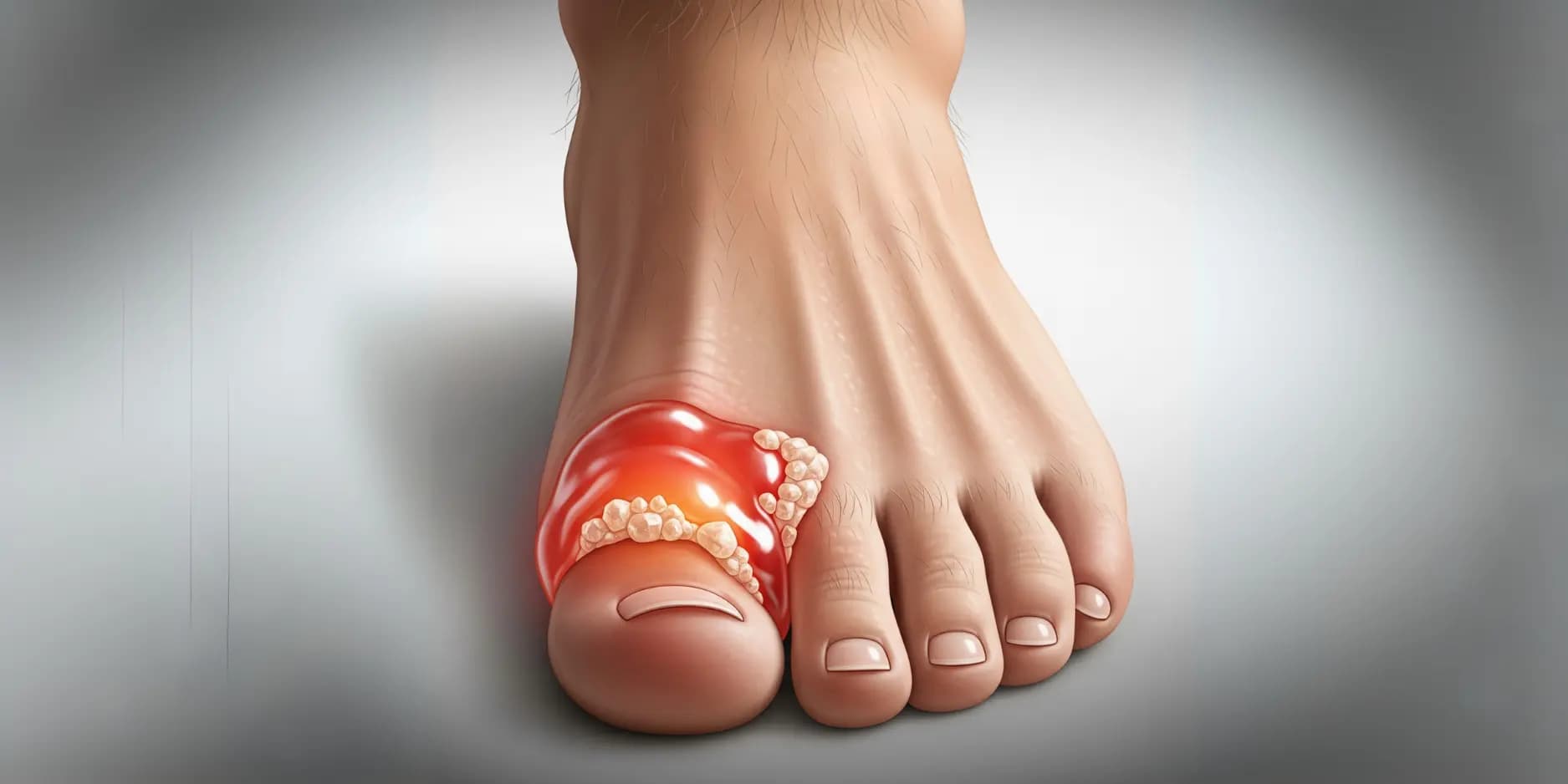
A sudden, exquisitely painful flare — classically in the big toe — that peaks within hours and resolves over days. Even minor contact with the joint is intolerable.
Intercritical Gout
The period between attacks where uric acid levels remain elevated without symptoms. If untreated, attacks become more frequent and joints are progressively damaged.
Chronic Tophaceous Gout
Long-standing gout leads to tophi — chalky deposits of urate crystals — forming under the skin near joints, in the ears, and in tendons, causing deformity and chronic pain.
Common Symptoms
Sudden, severe joint pain — classically in the big toe (podagra)
Intense throbbing or burning pain at the site of the attack
Joint redness, warmth, and swelling during an acute episode
Extreme tenderness — even the weight of a bedsheet is intolerable
Pain typically peaks within 24 hours and subsides over days to weeks
Recurring attacks affecting ankles, knees, wrists, or elbows
Tophi — firm, white chalky deposits under skin near joints
Elevated serum uric acid level on blood tests (above 6.8 mg/dL)
Kidney stones caused by uric acid crystal deposition
Chronic joint stiffness and reduced mobility between attacks
Flares triggered by alcohol, red meat, seafood, or dehydration
Fatigue and low-grade fever during acute gout attacks
Benefits of Homeopathy for Gout
Treats the Metabolic Root Cause
Homeopathy addresses the constitutional tendency towards impaired uric acid metabolism, not just the acute attack — aiming to reduce both the frequency and severity of future episodes.
Rapid Acute Attack Relief
Remedies like Colchicum, Ledum Pal, and Benzoic Acid are highly effective in shortening the duration and reducing the intensity of acute gout flares.
Reduces Serum Uric Acid
With consistent constitutional treatment, many patients experience a measurable reduction in serum uric acid levels alongside symptom relief — tracked via periodic blood tests.
Kidney-Friendly Approach
Unlike allopurinol, which can cause renal side effects, homeopathic remedies are metabolised without organ burden and are safe even in mild-to-moderate chronic kidney disease.
Prevents Tophi Formation
Regular constitutional treatment significantly reduces the accumulation of uric acid crystals in soft tissues, preventing the development of disfiguring tophi.
Integrated Dietary Guidance
We provide personalised dietary advice on purine restriction, hydration, and alcohol reduction — tailored to your food preferences and lifestyle — to complement the homeopathic prescription.
Our Homeopathic Approach
Acute Attack Management
During a gout attack, an acute remedy is selected based on the exact character of pain (burning, stinging, tearing), the joint involved, and whether warmth or cold applications relieve symptoms. Relief is typically expected within 12–24 hours.
Uric Acid Profile Review
We review serum uric acid levels, renal function (creatinine, eGFR), and any prior episodes, kidney stones, or tophi. This informs both remedy selection and the urgency of dietary intervention.
Constitutional Prescription
Between attacks, a deeper constitutional remedy is prescribed based on your full health picture — physical constitution, dietary tendencies, sleep, stress, and family history of metabolic conditions.
Dietary and Hydration Protocol
We provide a practical, Pune-adapted dietary plan — specifying which foods to limit (organ meats, red meat, certain dals, alcohol, fructose) and how to maintain adequate hydration to prevent crystal formation.
Monitoring and Long-Term Prevention
Serum uric acid is rechecked at 3 and 6 months. The goal is to maintain levels below 6 mg/dL, prevent further attacks, and eventually taper any concurrent conventional medications under physician guidance.
Frequently Asked Questions
Can homeopathy lower uric acid levels in blood?▾
Yes — with consistent constitutional treatment over 3–6 months, many patients see a reduction in serum uric acid. Homeopathy improves the body's ability to excrete uric acid through the kidneys while addressing the metabolic tendency that causes overproduction.
I am on allopurinol. Can I also take homeopathic treatment?▾
Absolutely. Homeopathic remedies do not interact with allopurinol or colchicine. Many patients start with both, and as uric acid normalises, the treating physician may consider tapering conventional medication. Never stop allopurinol without guidance.
How quickly does homeopathy work during a gout attack?▾
Acute remedies like Colchicum and Ledum Pal can significantly reduce pain intensity within 12–24 hours of the correct prescription. Response varies by individual, but patients typically notice clear improvement within one to two days.
Do I have to give up dal and vegetarian proteins?▾
Not all dals equally raise uric acid. Moong dal is generally safe; masoor and urad are higher in purines and better limited. Paneer, eggs, and most vegetables (except asparagus and spinach in excess) are fine. We provide specific, practical guidance for Indian diets.
Is gout related to kidney disease?▾
Chronic hyperuricaemia can damage kidneys over time, and kidney disease itself impairs uric acid excretion — creating a bidirectional relationship. We always check renal function at the outset and monitor it periodically.
Can gout be cured permanently?▾
Gout can be very well controlled — many patients remain attack-free for years with constitutional treatment and dietary discipline. Complete 'cure' in the sense of normalised uric acid metabolism is achievable in a significant proportion of patients with early and sustained treatment.
Patient Stories
"I had gout attacks every 6–8 weeks for two years. The pain in my big toe was unbearable — I could not even wear a slipper. After four months of homeopathic treatment and changing my diet, I have not had a single attack. My uric acid came down from 9.2 to 5.8."
✓ Zero attacks in 8 months; uric acid normalised
Nilesh A.
8 months of treatment"I was worried because my kidney function was also slightly low and I could not take allopurinol at the recommended dose. Dr. Thakur's constitutional approach worked very well — no attacks and my creatinine also stabilised."
✓ Gout controlled safely alongside mild CKD
Ashok P.
5 months of treatmentWhat to Inform Your Doctor
- 1
Which joints are affected and how many attacks you have had in the past year
- 2
Character of pain during an attack — burning, throbbing, stabbing — and whether cold or heat relieves it
- 3
Latest serum uric acid level and date of test
- 4
Renal function tests — creatinine, urea, eGFR — if available
- 5
Any history of kidney stones, especially uric acid stones
- 6
All current medications including allopurinol, colchicine, NSAIDs, diuretics (which raise uric acid)
- 7
Detailed dietary history: alcohol consumption, red meat, seafood, organ meats, fructose-rich beverages
- 8
Family history of gout, kidney disease, or metabolic syndrome
- 9
Any visible tophi around joints or ears
- 10
Daily water intake and occupation (field work vs. desk work affects hydration)
Preparing for Your Appointment
Bring Blood Reports
Bring your most recent serum uric acid, renal function test, and lipid profile. These are essential for baseline assessment.
Photograph Active Attacks
If you currently have or recently had a gout attack, a photo of the inflamed joint is very helpful for documentation.
Prepare a Food Diary
Note your typical weekly diet — meals, snacks, beverages, alcohol — so we can give practical, personalised dietary guidance.
List All Medications
Include diuretics, aspirin, and any supplements — some medications elevate uric acid and need to be factored into the plan.
First Visit: 45–60 Minutes
Allow adequate time for the initial case-taking. Constitutional prescribing requires understanding your full health history.
Arrive Well Hydrated
Drink at least 2–3 glasses of water before your visit. Dehydration concentrates uric acid and can trigger or worsen attacks.
Ready to start your healing journey?
Book your consultation with Dr. Meera Thakur at HealthKunj Clinics, Pune.
Book Your Consultation