
Lifestyle Disorders
Homeopathic Medicine for Fatty Liver — NAFLD & Liver Health

BHMS — Classical Homeopathic PhysicianPublished 15 Mar 2026· Updated 1 Aug 2026
Non-alcoholic fatty liver disease (NAFLD) is the most common liver condition in India, closely linked to obesity, insulin resistance, and metabolic syndrome. Constitutional homeopathy supports liver health and metabolic function as an adjunct to essential dietary modification and medical monitoring.
Overview
NAFLD affects approximately 38% of adults in India — making it one of the country's most prevalent chronic liver conditions. It ranges from simple steatosis (fat accumulation without inflammation) through non-alcoholic steatohepatitis (NASH) to fibrosis and, in advanced cases, cirrhosis.
NAFLD is deeply entwined with India's growing epidemic of obesity, type 2 diabetes, and metabolic syndrome. At HealthKunj, constitutional homeopathy is offered as an evidence-aware complement to lifestyle modification — supporting the liver's natural healing capacity while dietary and metabolic change addresses the root cause.
38%
of Indian adults estimated to have NAFLD
20%
of NAFLD cases may progress to NASH without treatment
98%
Patient satisfaction at HealthKunj
What Is It?
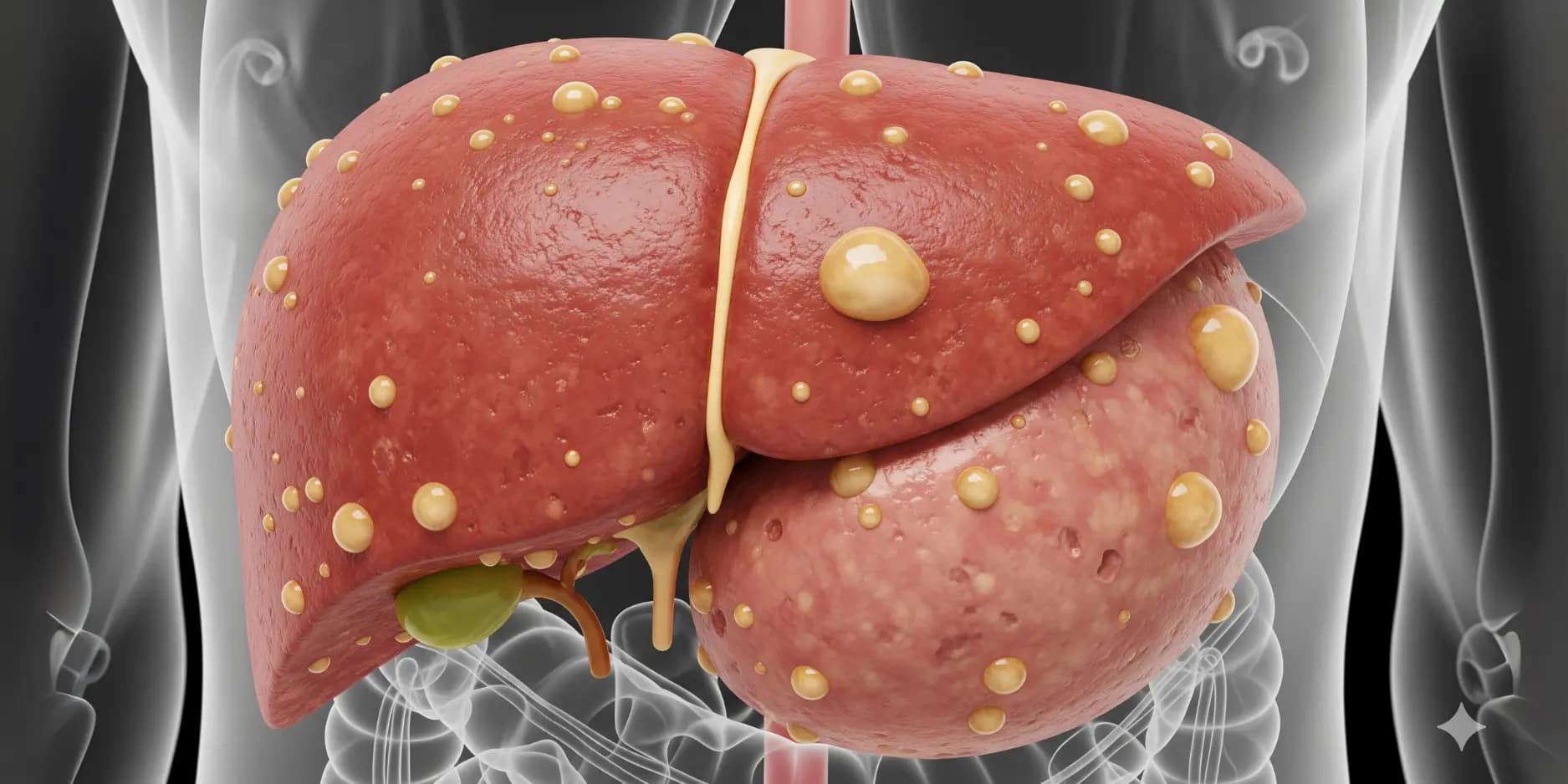
Fatty liver disease refers to the accumulation of excess fat (triglycerides) within hepatocytes — the liver cells. When this is not related to significant alcohol consumption, it is termed NAFLD. The condition progresses through distinct stages:
Simple Steatosis (Grade 1–2 NAFLD)
Fat accumulation in the liver without significant inflammation. Often reversible with dietary change and weight loss. Constitutional homeopathy is a helpful adjunct at this stage.
Non-Alcoholic Steatohepatitis (NASH)
Fat plus inflammation and hepatocellular injury. Carries a higher risk of progression to fibrosis and cirrhosis. Requires regular monitoring and active management alongside homeopathic support.
Fibrosis and Cirrhosis
Advanced stage requiring specialist hepatology management. Homeopathy is offered as supportive adjunctive care only, always secondary to specialist investigation and treatment.
Common Symptoms
Fatigue and low energy — often the earliest and most prominent symptom of fatty liver
Right upper abdominal discomfort or dull ache — from liver capsule distension
Abdominal fullness or bloating — particularly in the upper abdomen after meals
Unexplained weight gain — especially central/abdominal obesity associated with metabolic syndrome
Nausea, particularly after fatty or rich meals
Poor appetite despite obesity — a paradoxical feature in some patients
Elevated liver enzymes found incidentally on routine blood tests (ALT, AST)
Fatty liver seen on ultrasound abdomen — bright, echogenic liver on imaging
Excessive sweating, particularly at night
Skin changes — jaundice in advanced cases, spider angiomata in cirrhosis
Mental fog and poor concentration associated with impaired liver function
Many patients are entirely asymptomatic — NAFLD discovered only on routine investigations
Benefits of Homeopathy for Fatty Liver
Hepatoprotective Constitutional Treatment
Several homeopathic remedies have a well-established affinity for liver function and are selected constitutionally based on the individual's specific symptom pattern, metabolic tendencies, and the character of liver derangement — supporting hepatocellular health from within.
Addresses the Metabolic Root
NAFLD does not exist in isolation — it is embedded in the broader metabolic syndrome context of insulin resistance, dyslipidaemia, and central obesity. Constitutional homeopathy addresses the whole metabolic picture rather than treating the liver in isolation.
Supports Lifestyle Modification
Dietary change and weight loss are the cornerstone of NAFLD treatment. Homeopathic constitutional treatment supports appetite regulation, metabolic efficiency, and overall energy — making lifestyle changes more achievable and sustainable.
Reduction of Digestive Symptoms
Right upper abdominal discomfort, bloating, nausea, and fatty food intolerance respond well to hepatic constitutional remedies, improving daily quality of life during the long-term management of fatty liver disease.
Safe Alongside Conventional Management
Homeopathic remedies have no hepatotoxic effects and no pharmacological interactions with statins, antidiabetic medications, or other drugs commonly prescribed in metabolic syndrome. They are safe for long-term adjunctive use.
Monitoring-Compatible Care
Homeopathic treatment is compatible with all forms of liver function monitoring — blood tests, ultrasound, and fibroscan. Progress in liver enzyme levels and echogenicity on ultrasound provides objective markers alongside symptomatic improvement.
Our Homeopathic Approach
Full Metabolic and Liver History
Dr. Thakur documents liver enzyme trends, ultrasound findings, metabolic parameters (blood glucose, lipids, BMI), dietary habits, alcohol history, and medication history. The constitutional picture — temperament, digestive pattern, thermal state — is also fully assessed.
Review of Investigation Reports
Existing liver function tests, lipid profiles, blood glucose/HbA1c, ultrasound reports, and any fibroscan (liver stiffness) measurements are reviewed. These provide baseline data against which progress can be objectively tracked.
Constitutional Remedy Selection
Hepatic remedies are selected based on the individual's specific symptom character — the type of abdominal discomfort, digestive pattern, food aversions and cravings, energy levels, and the overall constitutional type. There is no single remedy for all fatty liver patients.
Dietary and Lifestyle Guidance
Evidence-based dietary advice — reducing refined carbohydrates, fructose, and saturated fats; increasing fibre and physical activity — is provided alongside homeopathic treatment. Weight loss of 7–10% body weight has the strongest evidence for NAFLD reversal.
Follow-Up and Objective Monitoring
Liver enzymes and metabolic markers are reviewed at 3–6 monthly intervals. Ultrasound changes are tracked over 12–24 months. Constitutional treatment is adjusted as the patient responds and metabolic parameters improve.
Frequently Asked Questions
Can homeopathy reverse fatty liver disease?▾
The primary reversal of fatty liver disease requires dietary modification and weight loss — these are irreplaceable. Constitutional homeopathy supports this process by addressing metabolic tendencies, improving liver function, and making lifestyle changes more sustainable. Objective improvement in liver enzymes and ultrasound appearances is observed in many patients who combine constitutional treatment with dietary change.
Is fatty liver dangerous and does it need treatment?▾
Simple fatty liver (NAFLD) is reversible with lifestyle change. However, if untreated, 10–20% of NAFLD cases progress to non-alcoholic steatohepatitis (NASH), which can lead to liver fibrosis, cirrhosis, and liver failure. Early treatment — including constitutional homeopathy alongside lifestyle modification — is important to prevent progression.
Can I take homeopathy alongside my statins and diabetic medications?▾
Yes — homeopathic remedies have no pharmacological interactions with statins, metformin, or other metabolic medications. Both can be safely combined. Your prescribing doctor should continue to manage your metabolic medications independently.
I was told my liver is fatty on ultrasound but my enzymes are normal. Do I still need treatment?▾
Yes — normal liver enzymes do not rule out significant fatty infiltration. Ultrasound evidence of fatty liver warrants lifestyle intervention and monitoring regardless of enzyme levels. Constitutional homeopathic treatment is a reasonable adjunct to dietary modification in this setting.
How long does homeopathic treatment take to show results in fatty liver?▾
Symptomatic improvement — reduced fatigue, abdominal discomfort, and digestive symptoms — is typically noticed within 6–10 weeks. Objective improvement in liver enzymes and ultrasound appearances develops over 6–18 months of combined constitutional treatment and lifestyle change.
Does alcohol consumption affect homeopathic treatment for fatty liver?▾
Alcohol is hepatotoxic and a major cause of liver disease. If your fatty liver has an alcoholic component, reducing or eliminating alcohol is the most important intervention. Homeopathic treatment works most effectively in patients who are actively modifying their diet and alcohol intake.
Patient Stories
"My liver enzymes were elevated for three years and ultrasound showed grade 2 fatty liver. After a year of constitutional treatment alongside dietary changes, my enzymes came back to normal for the first time and the last ultrasound showed grade 1. My doctor was genuinely surprised by the improvement."
✓ Liver enzymes normalised and ultrasound grade improved to grade 1
Vijay S., Kalyani Nagar
12 months"I had constant fatigue and right-sided abdominal ache for over a year. My GP found elevated ALT and fatty liver on scan. The constitutional treatment helped the fatigue noticeably within two months and the abdominal discomfort has resolved. My latest blood tests show the enzymes are coming down well."
✓ Fatigue resolved and liver enzymes progressively normalising
Deepa N., Kothrud
8 monthsWhat to Inform Your Doctor
- 1
Most recent liver function test results — ALT, AST, GGT, alkaline phosphatase, bilirubin, and albumin
- 2
Ultrasound abdomen report — grade of fatty liver (grade 1, 2, or 3) and any other findings
- 3
Lipid profile results — total cholesterol, LDL, HDL, and triglycerides
- 4
Blood glucose and HbA1c — to assess for diabetes or pre-diabetes contributing to NAFLD
- 5
Alcohol consumption history — type, frequency, and weekly units
- 6
Current medications — statins, metformin, antihypertensives, or any hepatotoxic drugs
- 7
Weight history — current BMI, recent weight changes, and history of central obesity
- 8
Dietary patterns — consumption of processed foods, refined carbohydrates, fructose-containing drinks
- 9
Any previous fibroscan or liver biopsy results if available
- 10
Associated conditions — type 2 diabetes, hypertension, hypothyroidism, PCOS — all linked to NAFLD
Preparing for Your Appointment
Bring Recent Blood Test Reports
Liver function tests, lipid profile, blood glucose, and HbA1c from the last 3–6 months give Dr. Thakur the metabolic baseline needed to guide treatment.
Bring Your Ultrasound Report
The ultrasound abdomen report showing fatty liver grade is essential. If you have had a fibroscan, bring that report too.
Reflect on Your Typical Diet
Think about your average daily food intake — particularly sugars, refined carbohydrates, fried foods, and alcohol. Honest dietary history guides both constitutional and dietary advice.
List All Current Medications
Some medications are hepatotoxic. A full medication list — including supplements and herbal products — helps Dr. Thakur ensure safe, complementary prescribing.
Note Your Weight Trend
Record your current weight and whether it has been increasing, stable, or decreasing over the last 12 months. Weight trend is an important prognostic factor in NAFLD.
Allow 60–75 Minutes
A full metabolic, dietary, and constitutional history requires time. Please plan for 60–75 minutes for your first consultation.
Ready to start your healing journey?
Book your consultation with Dr. Meera Thakur at HealthKunj Clinics, Pune.
Book Your ConsultationTwo ways to consult for Fatty Liver
Dr. Meera Thakur sees patients in person at our Kharadi clinic in Pune, and online by video anywhere in India.
In-clinic — Kharadi, Pune
First Floor, Blue Berry Society, 4, Blue Berry Rd, Tulaja Bhawani Nagar, Kharadi, Pune, Maharashtra 411014
Mon–Sat: 10:30 AM – 2:00 PM & 5:30 PM – 8:30 PM · Sunday: Closed
Book a clinic visitOnline — anywhere in India
A video consultation with the same detailed case-taking as an in-clinic visit. Medicines are couriered to your address.
Book an online consultation