
Lifestyle Disorders
Metabolic Syndrome — Whole-Person Metabolic Care

BHMS — Classical Homeopathic PhysicianPublished 15 Mar 2026· Updated 1 Aug 2026
Metabolic syndrome — the combination of central obesity, high blood pressure, elevated blood glucose, and dyslipidaemia — is India's most prevalent lifestyle disorder. Constitutional homeopathy addresses the individual's underlying metabolic tendency, supporting dietary change and medical management to restore comprehensive metabolic health.
Overview
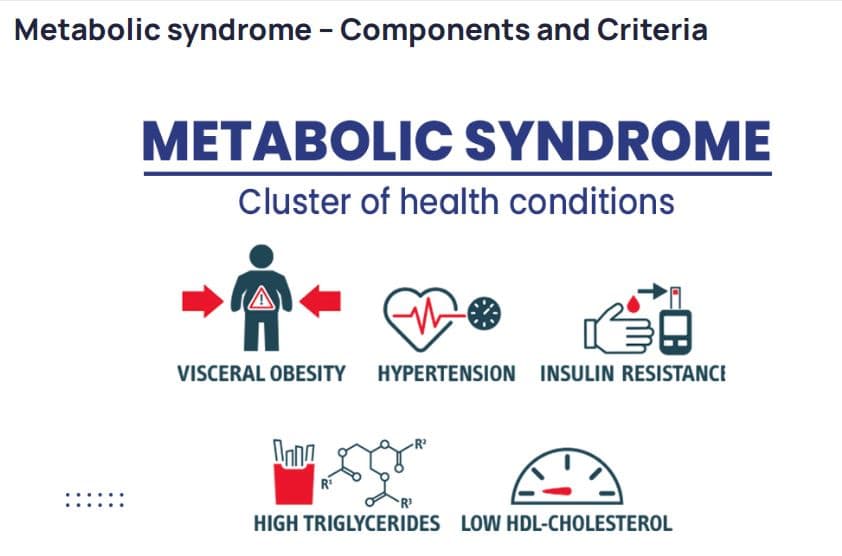
Metabolic syndrome affects an estimated 25–35% of urban Indian adults and is rising sharply with increasing urbanisation, sedentary lifestyles, and caloric excess. It is defined by the co-occurrence of at least three of five metabolic risk factors: central obesity, elevated blood glucose, elevated triglycerides, low HDL cholesterol, and high blood pressure.
The condition significantly increases the risk of type 2 diabetes, cardiovascular disease, and fatty liver. At HealthKunj, constitutional homeopathy is offered as an integrative adjunct to lifestyle modification and medical management — addressing the whole metabolic picture and the constitutional predisposition that makes each individual susceptible.
30%
of urban Indian adults have metabolic syndrome
5×
increased risk of type 2 diabetes with metabolic syndrome
98%
Patient satisfaction at HealthKunj
What Is It?
Metabolic syndrome is not a single disease but a cluster of interrelated metabolic abnormalities united by the common underlying mechanism of insulin resistance. When cells become resistant to insulin's signalling, a cascade of metabolic derangements follows:
Insulin Resistance — the Root
Cells fail to respond adequately to insulin, causing the pancreas to produce more. This hyperinsulinaemia drives central fat accumulation, triglyceride elevation, HDL reduction, and eventually elevated blood glucose.
Central Obesity — the Visible Marker
Excess visceral (abdominal) fat is metabolically active — secreting inflammatory cytokines that worsen insulin resistance, raise blood pressure, and increase cardiovascular risk. Waist circumference is a key diagnostic criterion.
Cardiovascular and Diabetes Risk
Metabolic syndrome doubles the risk of cardiovascular disease and quintuples the risk of type 2 diabetes. It also drives NAFLD, PCOS, gout, obstructive sleep apnoea, and chronic inflammation.
Common Symptoms
Central or abdominal obesity — waist circumference above 90cm (men) or 80cm (women) in South Asian adults
Elevated fasting blood glucose or impaired glucose tolerance — pre-diabetes or early type 2 diabetes
High blood pressure — systolic above 130 mmHg or diastolic above 85 mmHg
Elevated serum triglycerides — above 150 mg/dL on fasting lipid profile
Low HDL (good) cholesterol — below 40 mg/dL in men and 50 mg/dL in women
Fatigue — persistent tiredness and low energy, often worst after meals
Brain fog — difficulty concentrating, poor mental clarity, especially in the afternoon
Increased hunger and carbohydrate cravings — driven by insulin resistance
Acanthosis nigricans — darkening of skin folds in the neck, armpits, and groin (insulin resistance marker)
Non-alcoholic fatty liver disease — elevated liver enzymes found on routine testing
Polycystic ovary syndrome (PCOS) in women — closely associated with insulin resistance
Poor sleep quality and snoring — often associated with obesity-related sleep apnoea
Benefits of Homeopathy for Metabolic Syndrome
Addresses the Underlying Constitutional Metabolic Pattern
Metabolic syndrome is not five separate conditions — it is a single metabolic derangement expressed across multiple organ systems. Constitutional homeopathy addresses the individual's underlying metabolic tendency, not each parameter in isolation.
Supports Weight and Appetite Regulation
The most important intervention in metabolic syndrome is weight reduction. Constitutional homeopathic treatment can support appetite regulation, reduce carbohydrate craving, and improve metabolic efficiency — making sustainable dietary change more achievable.
Improves Energy and Reduces Fatigue
Fatigue driven by insulin resistance and poor metabolic function responds well to constitutional treatment. Improved energy in turn supports the capacity for physical activity — an essential component of metabolic recovery.
Adjunctive Support for Blood Glucose and Lipids
Constitutional treatment is used as an adjunct to — not a replacement for — medications managing blood pressure, blood glucose, and lipids. It supports the body's own regulatory mechanisms alongside pharmaceutical management.
Holistic Management of Associated Conditions
Metabolic syndrome is commonly associated with fatty liver, PCOS, sleep apnoea, depression, and joint problems. Constitutional homeopathy addresses the whole person — improving multiple associated conditions simultaneously within a single treatment framework.
Prevention of Progression to Type 2 Diabetes
For patients in the pre-diabetic stage, constitutional homeopathy — combined with dietary modification and exercise — can support improvement in insulin sensitivity and help prevent or delay progression to frank type 2 diabetes.
Our Homeopathic Approach
Full Metabolic Assessment
Dr. Thakur reviews all available metabolic parameters — fasting glucose, HbA1c, lipid profile, blood pressure, liver function tests, and anthropometric measurements. The full constitutional picture — temperament, thermal state, digestive pattern, sleep, and emotional state — is also documented.
Dietary and Lifestyle History
A detailed dietary history — carbohydrate intake, meal timing, processed food and sugar consumption, physical activity level — is taken. Lifestyle modification is the primary treatment in metabolic syndrome, and constitutional homeopathy works most effectively alongside it.
Constitutional Remedy Selection
The remedy is chosen based on the individual's unique metabolic, physical, and constitutional expression — not a generic protocol for metabolic syndrome. The remedy addresses the deepest predisposing tendency while supporting immediate symptom relief.
Coordinated Care with Physician
Patients on antihypertensive, antidiabetic, or lipid-lowering medication continue those prescriptions without interruption. Dr. Thakur works alongside the patient's physician, never advising medication changes. Blood tests are reviewed jointly to track metabolic progress.
Regular Metabolic Monitoring
Blood glucose, HbA1c, lipid profile, blood pressure, and weight are tracked at 3–6 monthly intervals. Constitutional treatment is adjusted as metabolic parameters respond. Objective improvement across multiple markers provides meaningful evidence of progress.
Frequently Asked Questions
Can homeopathy treat metabolic syndrome without medication?▾
For mild metabolic syndrome in early stages — where medication has not yet been prescribed — constitutional homeopathy combined with dietary modification and exercise can be a powerful primary intervention. For patients already on antihypertensive, antidiabetic, or lipid-lowering medications, homeopathy is adjunctive. Never stop prescribed metabolic medications without your doctor's guidance.
What is the most important part of treating metabolic syndrome?▾
Dietary modification and weight loss are unambiguously the most important interventions. Even a 5–10% reduction in body weight produces significant improvements in blood pressure, blood glucose, and lipids. Constitutional homeopathy supports the capacity to make and sustain these changes, but does not replace them.
Can homeopathy help prevent type 2 diabetes in pre-diabetic patients?▾
Yes — for patients with impaired fasting glucose or impaired glucose tolerance (pre-diabetes), constitutional homeopathic treatment alongside dietary modification may support improvement in insulin sensitivity. Regular HbA1c monitoring should continue, and any deterioration must prompt immediate medical review.
How long does it take to see improvement in metabolic parameters with homeopathic treatment?▾
Subjective improvement in energy, fatigue, and appetite is typically noticed within 6–10 weeks. Objective improvement in blood glucose, lipids, and blood pressure develops over 3–9 months of consistent constitutional treatment combined with dietary change.
I have PCOS and metabolic syndrome — can homeopathy address both?▾
Yes — PCOS and metabolic syndrome share the same underlying metabolic root of insulin resistance. Constitutional homeopathy addresses the broader hormonal and metabolic pattern, which can improve both conditions simultaneously. This is one of the areas where constitutional prescribing offers particular value.
Is homeopathy safe alongside metformin and statins?▾
Yes — homeopathic remedies have no pharmacological interactions with metformin, statins, antihypertensive drugs, or any other metabolic medications. Both can be safely and beneficially combined.
Patient Stories
"I was told I had metabolic syndrome — pre-diabetic, high triglycerides, high blood pressure, and overweight. My doctor wanted to put me on medication for everything. I started constitutional treatment alongside major dietary changes. After 14 months, my HbA1c is back in the normal range, triglycerides have nearly halved, and my blood pressure is well controlled without medication."
✓ HbA1c normalised, triglycerides halved, and blood pressure controlled without medication
Ajit P., Hadapsar
14 months"I had been gaining weight steadily for five years and my blood tests were getting worse every year. The fatigue was the worst part — I had no energy for anything. Ten months into constitutional treatment and dietary changes, I have lost 9kg, my energy is transformed, and my last blood tests were the best in years."
✓ 9kg weight loss, improved energy, and improved metabolic blood markers
Sunita K., Wagholi
10 monthsWhat to Inform Your Doctor
- 1
Most recent metabolic blood tests — fasting glucose, HbA1c, lipid profile (total cholesterol, LDL, HDL, triglycerides)
- 2
Blood pressure readings — current home readings and clinic measurements
- 3
Waist circumference and weight history — current BMI and weight trend over recent years
- 4
Liver function tests — to assess for associated fatty liver disease
- 5
Current medications — antihypertensives, antidiabetics (metformin, glipizide, etc.), statins
- 6
Dietary habits — daily carbohydrate intake, sugar consumption, processed food frequency
- 7
Physical activity level — current exercise frequency and type
- 8
Associated conditions — fatty liver, PCOS, sleep apnoea, gout, or depression
- 9
Family history — type 2 diabetes, heart disease, stroke, or hypertension
- 10
Stress levels and sleep quality — both profoundly influence insulin resistance and metabolic health
Preparing for Your Appointment
Bring All Recent Blood Test Reports
Fasting glucose, HbA1c, full lipid profile, liver function tests — from the last 3–6 months. These are the baseline metabolic markers against which progress is tracked.
Know Your Current Measurements
Note your current weight, height, and waist circumference. If you have home blood pressure readings, bring those too.
Reflect on Your Typical Daily Diet
Think about your typical breakfast, lunch, and dinner — including snacks, drinks, and eating-out frequency. Honest dietary assessment is essential for constitutional and lifestyle guidance.
List All Current Medications
Include all prescribed medications and doses, plus any supplements, herbal products, or over-the-counter medications.
Note Your Activity Level
Approximate daily steps, exercise sessions per week, and type of exercise. Sedentary occupation is an important metabolic risk factor.
Allow 75 Minutes
Metabolic syndrome is a multisystem condition requiring a thorough assessment. Please allow 75 minutes for your first consultation.
Ready to start your healing journey?
Book your consultation with Dr. Meera Thakur at HealthKunj Clinics, Pune.
Book Your ConsultationTwo ways to consult for Metabolic Syndrome
Dr. Meera Thakur sees patients in person at our Kharadi clinic in Pune, and online by video anywhere in India.
In-clinic — Kharadi, Pune
First Floor, Blue Berry Society, 4, Blue Berry Rd, Tulaja Bhawani Nagar, Kharadi, Pune, Maharashtra 411014
Mon–Sat: 10:30 AM – 2:00 PM & 5:30 PM – 8:30 PM · Sunday: Closed
Book a clinic visitOnline — anywhere in India
A video consultation with the same detailed case-taking as an in-clinic visit. Medicines are couriered to your address.
Book an online consultation