
Respiratory Health
Nasal Polyps

BHMS — Classical Homeopathic PhysicianPublished 15 Mar 2026· Updated 1 Aug 2026
Nasal polyps grow back after surgery in most patients because surgery addresses the result, not the cause. Homeopathy targets the underlying immune inflammation that creates polyps — offering a genuine non-surgical alternative and a way to prevent post-surgical recurrence.
Overview
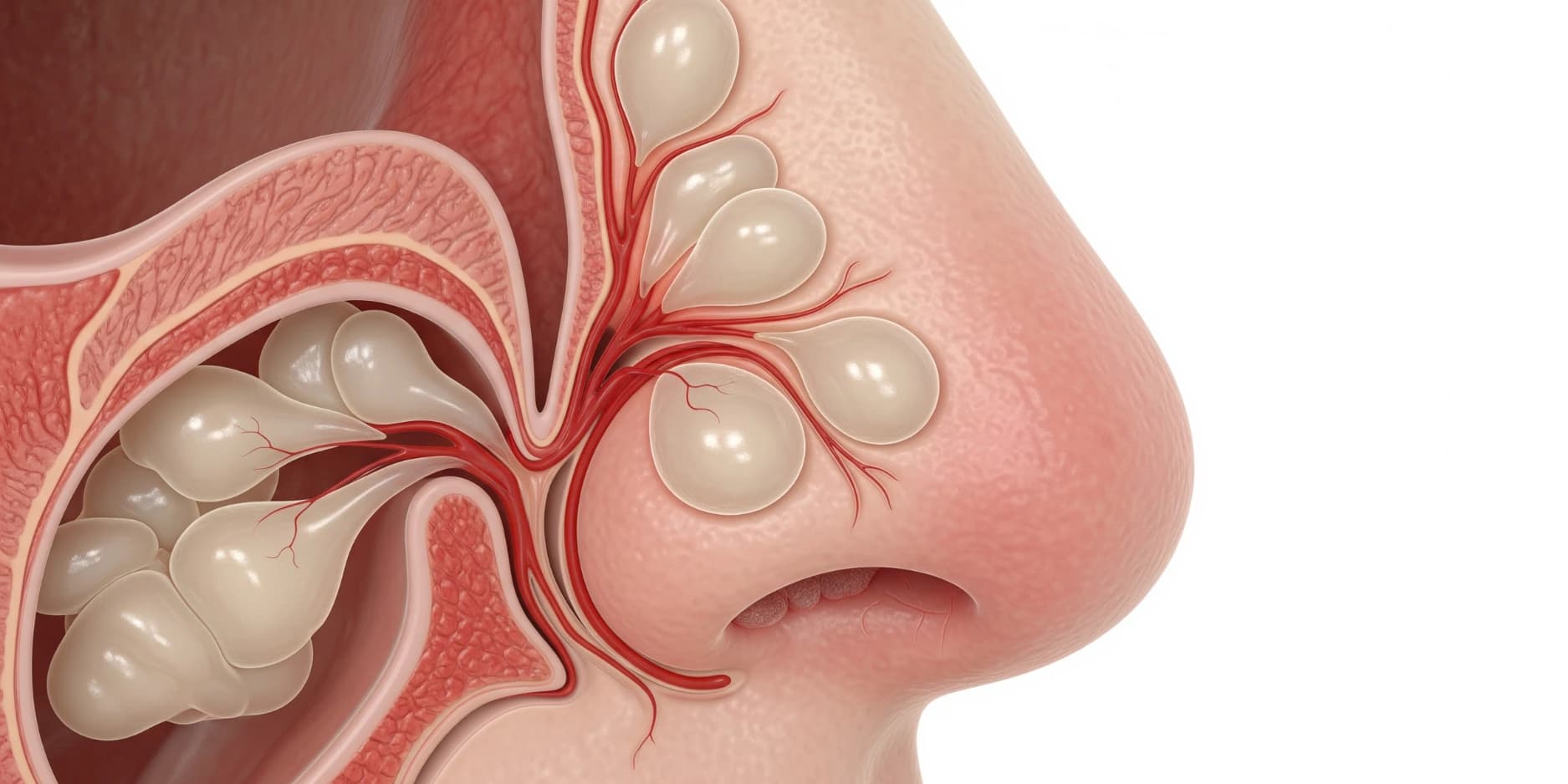
Nasal polyps are benign, non-cancerous growths of the nasal and sinus lining — soft, painless, and grape-like in appearance. They arise from chronic inflammation and are strongly associated with allergy, asthma, and aspirin sensitivity. While not dangerous in themselves, large or bilateral polyps cause significant obstruction, loss of smell, and predispose to chronic sinusitis.
Functional endoscopic sinus surgery (FESS) is effective at removing polyps, but recurrence rates are high — exceeding 70% within 4 years in many studies. Conventional post-surgical management with nasal steroids helps, but does not fully address the immune mechanism driving re-growth.
70%+
polyp recurrence rate after surgery within 4 years
1–2%
of the population affected by nasal polyps
98%
Patient satisfaction at HealthKunj
What Is It?
Nasal polyps develop when the mucosal lining of the nasal passages and sinuses becomes chronically inflamed — particularly with a type 2 immune response dominated by eosinophils and IgE. This prolonged inflammation causes the mucosa to swell, thicken, and eventually prolapse downwards, forming the characteristic smooth, pale, teardrop-shaped masses.
Eosinophilic Polyps
The most common type — driven by allergic-type (type 2) immune responses. Strongly associated with asthma, allergic rhinitis, and aspirin sensitivity.
Infective Polyps
Less common — associated with chronic bacterial or fungal sinusitis. May require combined antimicrobial and constitutional treatment.
Antrochoanal Polyps
Arise from the maxillary sinus, usually unilateral, and more common in children and young adults. Often require surgical removal but recur less frequently.
Common Symptoms
Persistent nasal obstruction — difficulty breathing through one or both nostrils
Loss of sense of smell (anosmia) — often the first symptom
Reduced sense of taste, closely linked to impaired smell
Chronic post-nasal drip with frequent throat-clearing
A feeling of fullness or pressure in the face
Recurrent sinus infections — polyps block normal sinus drainage
Snoring or mouth breathing — particularly during sleep
Nasal voice quality — as though speaking with a blocked nose
Constant or recurring headaches — especially around the forehead and cheeks
Runny nose with watery or mucoid discharge
Chronic fatigue from disrupted sleep and persistent congestion
Benefits of Homeopathy for Nasal Polyps
Non-Surgical Conservative Management
Constitutional homeopathy aims to reduce polyp size and associated inflammation without surgery. For small-to-medium polyps, this can restore comfortable breathing and improve smell.
Prevents Recurrence
Polyps recur in over 70% of cases after surgery within 4 years. Homeopathy addresses the underlying immune dysregulation that causes polyps to re-form — a critical advantage over surgical removal alone.
Reduces Allergic Inflammation
Most nasal polyps are eosinophilic — driven by allergic-type immune responses. Homeopathy corrects the immune tendency that sustains this chronic eosinophilic inflammation.
Improves Sense of Smell
Many patients report partial or full restoration of smell as polyp-related congestion reduces — one of the most impactful quality-of-life improvements for affected patients.
Safe for Long-Term Use
Unlike oral corticosteroids (which carry systemic risks) or nasal steroids (which have ceiling effects), homeopathic treatment can be continued indefinitely without side effects.
Treats Associated Sinusitis & Asthma
Nasal polyps frequently co-exist with asthma and chronic sinusitis (the Samter's triad in aspirin-sensitive patients). Constitutional treatment addresses all three conditions together.
Our Homeopathic Approach
Full ENT & Allergy History
Dr. Thakur takes a detailed history including duration, number of polyps (if known from endoscopy or CT), previous treatments (nasal steroids, oral steroids, surgery), and associated conditions including asthma, aspirin sensitivity, and fungal sinusitis.
Review of Imaging & Endoscopy
CT scan of paranasal sinuses and nasal endoscopy reports help Dr. Thakur understand the extent of polyposis and whether conservative management is appropriate. Large polyps causing complete obstruction may still require surgical debulking.
Constitutional Remedy Prescription
Polyp patients with profuse watery discharge and loss of smell may require different remedies from those with thick, offensive mucus and recurring infections. The full individual picture — not just the diagnosis — guides remedy selection.
Monitoring Improvement Objectively
Dr. Thakur tracks improvement through symptom scores — breathing ease, smell recovery, post-nasal drip, sleep quality. Repeat endoscopy or CT can confirm polyp reduction over 6–12 months.
Long-Term Maintenance to Prevent Recurrence
Even after significant improvement, maintenance constitutional treatment is recommended to prevent regrowth — particularly in patients with a strong allergic or aspirin-sensitive background.
Frequently Asked Questions
Can homeopathy completely remove nasal polyps?▾
In small-to-medium polyps, significant reduction or near-complete resolution is achievable with constitutional treatment over 8–18 months. Very large polyps causing complete airway obstruction may require surgical debulking first, after which homeopathy can prevent recurrence.
How is homeopathy different from nasal steroid sprays for polyps?▾
Nasal steroids reduce polyp size while you use them, but polyps typically regrow when sprays are stopped. Homeopathy works on the immune mechanism that creates polyps, aiming for a more durable change — not just symptomatic suppression.
I've already had sinus surgery and the polyps came back. Can homeopathy help?▾
Yes — post-surgical recurrence is one of the most common reasons patients seek homeopathic treatment. The aim is to reduce the immune tendency for re-formation and extend the polyp-free interval significantly.
Will my sense of smell return?▾
Smell loss in nasal polyps is largely mechanical — the olfactory area is blocked by polyp bulk and swelling. As polyps reduce, smell often improves noticeably. Complete restoration depends on the degree of olfactory nerve involvement.
Are nasal polyps related to my asthma?▾
Yes — nasal polyps, asthma, and aspirin/NSAID sensitivity frequently co-exist (known as Samter's triad or AERD). Constitutional homeopathy is particularly well-suited to this triad, as it addresses all three aspects through a single constitutional remedy.
Is there a diet I should follow?▾
Patients with aspirin-exacerbated respiratory disease (AERD) benefit from a low-salicylate diet, which Dr. Thakur will discuss if relevant. Generally, an anti-inflammatory diet rich in fresh vegetables and low in processed foods supports treatment.
Patient Stories
"I had bilateral polyps and couldn't smell anything for three years. My ENT had scheduled surgery but I wanted to try homeopathy first. After fourteen months, a repeat endoscopy showed significant reduction and I can smell again — not perfectly, but I can smell my food and flowers. Surgery is on hold."
✓ Polyps reduced on endoscopy; smell partially restored
Sunita P., Hadapsar
14 months"I'd had two surgeries — polyps came back both times within two years. A friend suggested homeopathy for prevention after my second surgery. It's been 18 months since surgery and there's been no significant regrowth. My ENT says this is the longest I've been polyp-free."
✓ Post-surgical recurrence prevented for 18+ months
Vikram D., Baner
18 monthsWhat to Inform Your Doctor
- 1
How long you have had nasal polyps and whether they have been confirmed by endoscopy or CT
- 2
Previous treatments — nasal steroid sprays, oral steroid courses, and duration of each
- 3
History of sinus surgery — type of surgery, how many times, and how soon polyps recurred
- 4
Associated asthma — severity, medications, and whether aspirin or NSAIDs worsen breathing
- 5
Sensitivity or intolerance to aspirin, ibuprofen, or other NSAIDs
- 6
Sense of smell status — when it was lost and whether there is any partial recovery
- 7
Allergy test results, if available (skin prick test or specific IgE blood tests)
- 8
Any CT scan or MRI of paranasal sinuses — please bring reports and images if possible
- 9
Sleep quality — whether snoring or mouth breathing is present
Preparing for Your Appointment
Bring Endoscopy Reports
If you have had nasal endoscopy, please bring the report and any photographs. This helps assess polyp size and location.
Bring CT Scan Reports
A CT of the paranasal sinuses is the most informative imaging for polyp extent. Bring both the report and the CD/images if possible.
List All Nasal Sprays & Steroids
Note all steroid sprays and oral steroid courses taken — including doses and duration — to help Dr. Thakur understand your treatment history.
Note Your Smell Status
Rate your sense of smell on a scale of 0–10. Note when it changed and whether anything temporarily improves it.
List Known Allergies & Sensitivities
Note all known allergies — including aspirin, NSAIDs, foods, dust, and moulds — as these are relevant to polyp formation.
Allow 60 Minutes
Your first consultation is detailed. Bring all previous reports and allow adequate time for a thorough assessment.
Ready to start your healing journey?
Book your consultation with Dr. Meera Thakur at HealthKunj Clinics, Pune.
Book Your Consultation