
Mental Health
PTSD — Trauma Support

BHMS — Classical Homeopathic PhysicianPublished 15 Mar 2026· Updated 1 Aug 2026
Post-Traumatic Stress Disorder is the body and mind's response to experiences that overwhelm the nervous system. Constitutional homeopathy offers gentle, trauma-informed supportive care — working alongside specialist trauma therapy to help regulate the nervous system and support recovery.
Overview
PTSD can develop after any experience that threatens life, bodily integrity, or psychological safety — including road accidents, assault, medical trauma, domestic violence, childhood abuse, natural disasters, and occupational exposure to trauma. It is estimated to affect 6–9% of adults during their lifetime, with significantly higher rates in populations exposed to conflict, disaster, or violence.
At HealthKunj, PTSD is approached with the seriousness and specialist referral it requires. Evidence-based trauma therapy — EMDR or trauma-focused CBT — is the cornerstone of PTSD treatment and is always recommended. Constitutional homeopathy is offered as adjunctive support: addressing the hyperarousal, sleep disruption, emotional reactivity, and physical symptoms that can make engaging in trauma therapy so challenging.
6–9%
lifetime prevalence of PTSD in the general population
50%
of PTSD cases go untreated or under-treated
98%
Patient satisfaction at HealthKunj
What Is It?
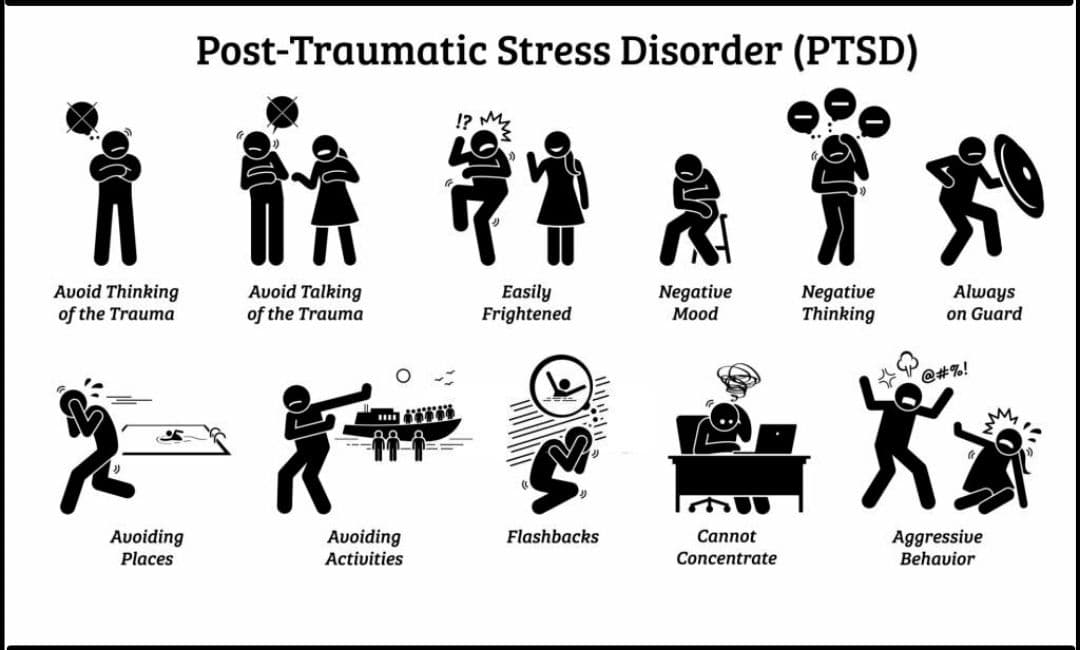
PTSD is diagnosed when symptoms following a traumatic event persist for more than one month and cause significant distress or impairment. The condition is organised around four symptom clusters:
Intrusion Symptoms
Flashbacks, intrusive memories, and nightmares that bring the traumatic experience involuntarily into the present — the hallmark of PTSD.
Avoidance
Active avoidance of trauma-related thoughts, feelings, people, places, and activities — progressively constricting life to manage distress.
Negative Alterations in Cognition and Mood
Persistent negative beliefs (about oneself, others, or the world), emotional numbing, loss of interest, persistent shame or guilt, and a persistent inability to feel positive emotion.
Alterations in Arousal and Reactivity
Hypervigilance, exaggerated startle, sleep disturbance, irritability, concentration difficulties, and reckless or self-destructive behaviour.
Common Symptoms
Intrusive memories — vivid, involuntary recollections of the traumatic event
Flashbacks — reliving the trauma as if it is happening again in the present
Nightmares — distressing dreams related to the traumatic event
Severe emotional distress when reminded of the trauma
Intense physical reactions to trauma cues — racing heart, sweating, trembling
Hypervigilance — being constantly on guard, scanning for danger
Exaggerated startle response — jumping at sudden noises or movements
Difficulty sleeping — both falling asleep and staying asleep
Emotional numbness — inability to feel positive emotions (emotional blunting)
Avoidance of trauma-related thoughts, feelings, places, or people
Negative beliefs about oneself or the world following trauma
Persistent feelings of guilt, shame, fear, or horror
Benefits of Homeopathy for PTSD
Adjunctive Support Alongside Trauma Therapy
Trauma-focused CBT, EMDR, and other specialist trauma therapies are the evidence-based treatments for PTSD. Constitutional homeopathy is offered as a safe adjunct — supporting the patient through the process of trauma therapy.
Addresses Hyperarousal and Sleep Disturbance
The chronic hyperarousal, hyper-vigilance, and sleep disruption of PTSD are particularly amenable to constitutional homeopathic treatment — often providing relief in these areas even in complex, long-standing cases.
Safe Alongside Psychiatric Medications
Constitutional homeopathic remedies do not pharmacologically interact with SSRIs, prazosin, or other medications prescribed for PTSD. Treatment can be safely combined with existing medication.
Addresses the Whole Trauma Response
Constitutional homeopathy considers the entire trauma response — emotional, physical, cognitive, and relational — not just the diagnostic criteria. This whole-person view is central to classical homeopathic prescribing.
Supports Emotional Regulation
The extreme emotional reactivity and emotional numbing that alternate in PTSD respond to constitutional treatment through gradual improvement in emotional regulation and nervous system stability.
Compassionate, Unhurried Care
Trauma survivors require care that respects their pace. Homeopathic consultations at HealthKunj provide extended, compassionate space — patients share only what they choose to.
Our Homeopathic Approach
Trauma-Informed Case-Taking
PTSD consultations are conducted with trauma-informed principles — paced, respectful, and patient-led. Patients are not required to narrate the traumatic event in detail; the response to trauma is what guides prescribing.
Assessment of the PTSD Pattern
The constitutional picture in PTSD is mapped across its four clusters — intrusion, avoidance, negative cognition and mood, and hyperarousal — identifying which symptoms are most prominent and distressing.
Coordination with Trauma Specialist
Dr. Thakur encourages engagement with a trauma-specialist psychologist for EMDR or trauma-focused CBT alongside constitutional treatment. Homeopathy is clearly positioned as supportive adjunctive care.
Constitutional Remedy Prescription
The remedy is chosen based on the constitutional portrait — the characteristic fear state, the most distressing symptoms, the physical responses, the emotional pattern, and the person's relationship with the traumatic memory.
Long-Term Support and Review
PTSD recovery is not linear. Follow-up consultations at 4–6 week intervals allow the remedy to be adjusted as trauma processing progresses and the clinical picture changes.
Frequently Asked Questions
Should I be in trauma therapy alongside homeopathic treatment?▾
Yes — and Dr. Thakur will always encourage this. Evidence-based trauma therapy (EMDR, trauma-focused CBT) is the most effective treatment for PTSD. Constitutional homeopathy supports the patient through this process but should not replace specialist trauma therapy.
Do I have to talk about what happened to me?▾
No — not in detail. Constitutional homeopathic prescribing for trauma focuses primarily on the nature of the response to the trauma, not the event itself. Patients share only what feels comfortable.
Can homeopathy help with complex PTSD (C-PTSD)?▾
Constitutional homeopathy can be a supportive adjunct in Complex PTSD — which arises from prolonged or repeated trauma and involves deeper disruption to self-identity and relational patterns. C-PTSD requires specialist trauma therapy and often long-term psychiatric support; homeopathy supplements this.
Is homeopathic treatment safe alongside my PTSD medication?▾
Yes. Homeopathic remedies have no pharmacological interaction with SSRIs, prazosin, or other medications used in PTSD treatment.
Can children with PTSD be treated?▾
Yes. Children respond well to constitutional homeopathy for trauma responses. Paediatric PTSD — whether from abuse, accidents, medical trauma, or witnessing violence — can be gently and safely supported with constitutional treatment alongside specialist child trauma services.
How long does constitutional treatment take for PTSD?▾
PTSD recovery is a long-term process regardless of modality. Constitutional homeopathic support is typically maintained for 12–24 months alongside trauma therapy, with regular review and adjustment as the clinical picture evolves.
Patient Stories
"After a road accident three years ago, I couldn't sleep, couldn't drive, and jumped at every loud sound. I was in trauma therapy but struggling with the hyperarousal. Constitutional homeopathy made a significant difference to my sleep and my nervous system's baseline reactivity. I could engage in therapy more effectively."
✓ Hyperarousal and sleep significantly improved, therapy engagement enhanced
Kavita D., Kharadi
12 months"I had childhood trauma that I only began processing in my thirties. The constitutional treatment helped me feel more regulated and grounded during a very difficult period of therapy. I don't think I could have gone through the EMDR work without the additional support."
✓ Emotional regulation improved, trauma therapy supported
Ritu S., Viman Nagar
8 monthsWhat to Inform Your Doctor
- 1
Nature of the trauma — type (without requiring detailed narration), approximate when it occurred
- 2
Most distressing current symptoms — flashbacks, nightmares, hypervigilance, avoidance, emotional numbing
- 3
Sleep pattern — difficulty falling asleep, nightmares, early waking
- 4
Triggers — what reliably provokes distress or flashbacks
- 5
Avoidance — what you now avoid because of the trauma
- 6
Physical trauma responses — what happens in your body when triggered
- 7
Current psychiatric medications — names, doses, how long you have been taking them
- 8
Current or previous trauma therapy — type, duration, and helpfulness
- 9
Support system — close relationships and social support available
- 10
Any current safety concerns — including self-harm or suicidal thoughts, which are always asked sensitively
Preparing for Your Appointment
You Share Only What You Choose
You are never required to narrate traumatic events in detail. Constitutional prescribing focuses on your response to trauma, not the event.
List All Medications
Note current medications including any prescribed for PTSD (SSRIs, prazosin, sleep medication). Do not stop any medications before your appointment.
Note Your Main Symptoms
What symptoms bother you most — nightmares, flashbacks, hypervigilance, emotional numbing, avoidance? This helps focus the consultation.
Note Your Triggers
What reliably provokes distress — sensory triggers (sounds, smells), anniversaries, specific places, or social situations?
Bring Any Letters or Reports
If you have a PTSD diagnosis from a psychiatrist or previous assessment, these provide helpful clinical context.
Allow 75–90 Minutes
Trauma-informed case-taking is unhurried. Please allow adequate time and arrive without feeling rushed.
Ready to start your healing journey?
Book a consultation with Dr. Meera Thakur at HealthKunj Clinics, Pune.
Book Consultation