
Women's Health
Uterine Polyp — Constitutional Care

BHMS — Classical Homeopathic PhysicianPublished 15 Mar 2026· Updated 1 Aug 2026
Uterine polyps are overgrowths of the endometrial lining that can disrupt menstrual regularity and, in some cases, affect fertility. Constitutional homeopathy addresses the underlying hormonal terrain that predisposes to their formation, offering complementary care alongside gynaecological monitoring and treatment.
Overview
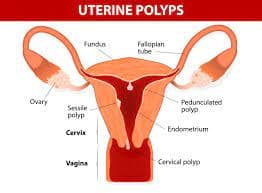
Uterine polyps are soft, fleshy growths arising from the inner lining of the uterus (endometrium). They range in size from a few millimetres to several centimetres, and may be single or multiple. While most are benign, they can cause significant menstrual disruption, intermenstrual bleeding, and in some women, difficulty conceiving.
At HealthKunj, uterine polyps are managed in close coordination with gynaecological care. Constitutional homeopathy is offered as an adjunct to standard monitoring and treatment — with particular focus on symptom management, addressing the hormonal imbalance that underpins polyp formation, and reducing the risk of recurrence after surgical removal.
10–15%
of women are estimated to have uterine polyps
High
recurrence rate after surgical removal without constitutional management
98%
Patient satisfaction at HealthKunj
What Is It?
Uterine (endometrial) polyps develop when areas of the endometrial lining overgrow and form finger-like or rounded projections into the uterine cavity. They are usually oestrogen-sensitive and more common in women approaching or in perimenopause, though they can occur at any reproductive age.
Pedunculated Polyps
Attached to the uterine wall by a narrow stalk. These can sometimes protrude through the cervix, causing pain or discharge.
Sessile Polyps
Broad-based growths sitting flat against the endometrial surface. More common than pedunculated forms.
Functional Polyps
Composed of tissue that responds to hormonal fluctuations — these may cause cyclical symptoms that vary through the menstrual cycle.
Common Symptoms
Irregular or unpredictable menstrual cycles — periods that are difficult to anticipate
Heavy menstrual bleeding (menorrhagia) — soaking through pads or tampons rapidly
Spotting or bleeding between periods (intermenstrual bleeding)
Postmenopausal bleeding — any vaginal bleeding after menopause requires prompt evaluation
Prolonged menstrual periods lasting longer than 7 days
Pelvic discomfort or heaviness, especially around menstruation
Difficulty conceiving or unexplained infertility associated with uterine pathology
Vaginal discharge — watery or mucoid discharge between periods
Cramping or low abdominal pain outside the usual menstrual phase
Recurrent polyp formation after previous surgical removal
Fatigue and anaemia secondary to chronic heavy blood loss
Benefits of Homeopathy for Uterine Polyp
Constitutional Management of Recurrence
Uterine polyps frequently recur after surgical removal. Constitutional homeopathy addresses the underlying hormonal and immune terrain that predisposes to recurrent polyp formation, offering a complementary strategy alongside gynaecological monitoring.
Regulation of Hormonal Imbalance
Many uterine polyps are oestrogen-sensitive. Homeopathic treatment targets the constitutional state — including the broader hormonal pattern — which may support a better hormonal environment over time.
Symptom Relief Without Surgery for Eligible Patients
Small, asymptomatic polyps are often managed conservatively. For patients under active gynaecological monitoring, constitutional homeopathy can support symptom management and overall uterine health during the watchful waiting period.
Non-Hormonal Support
Some women prefer to avoid hormonal medications due to side effects or comorbidities. Constitutional homeopathic care is a non-hormonal option that can be safely combined with gynaecological management.
Addresses Associated Symptoms Holistically
Heavy bleeding, anaemia, pelvic discomfort, and cycle irregularity are all addressed as part of the constitutional picture — not as separate complaints requiring separate treatments.
Safe Alongside Gynaecological Care
Homeopathic treatment works alongside your gynaecologist's management plan — whether that includes monitoring, hysteroscopy, or other interventions. It does not replace gynaecological assessment.
Our Homeopathic Approach
Comprehensive Gynaecological and Constitutional History
Dr. Thakur documents the full menstrual history — cycle length, duration, flow characteristics, associated symptoms — alongside the broader constitutional picture including hormonal health, past gynaecological conditions, and relevant investigations.
Review of Gynaecological Investigations
Ultrasound reports, hysteroscopy findings, and any biopsy results are reviewed carefully. Homeopathic treatment is always integrated with — never substituted for — proper gynaecological investigation and diagnosis.
Identification of the Hormonal and Constitutional Pattern
The constitutional prescription considers the patient's hormonal pattern, menstrual characteristics, emotional state, physical constitution, and any related conditions such as PCOS, fibroids, or endometriosis.
Targeted Remedy Prescription
The remedy is selected based on the complete constitutional picture. In uterine polyp cases, remedies that address the specific menstrual pathology — excessive proliferation, chronic discharge, or associated bleeding — are given particular weight.
Regular Review Aligned With Gynaecological Monitoring
Follow-up consultations are scheduled every 4–6 weeks and timed to align with any scheduled gynaecological reviews or repeat ultrasounds, ensuring an integrated and co-ordinated approach to care.
Frequently Asked Questions
Can homeopathy dissolve uterine polyps?▾
Homeopathy does not claim to dissolve or remove uterine polyps. Its role is constitutional — addressing the underlying terrain that predisposes to polyp formation, managing associated symptoms such as heavy bleeding and cycle irregularity, and complementing conservative gynaecological management. Polyps that require removal will be referred for hysteroscopic polypectomy.
Do I still need to see a gynaecologist if I am taking homeopathic treatment?▾
Yes — absolutely. Gynaecological assessment, ultrasound monitoring, and where indicated, hysteroscopy are essential. Homeopathic treatment at HealthKunj is always adjunctive to, never a replacement for, appropriate gynaecological care. Dr. Thakur will always encourage and support ongoing monitoring.
My polyp keeps coming back after removal. Can homeopathy help with recurrence?▾
Recurrent uterine polyps are a recognised clinical challenge. Constitutional homeopathy aims to address the systemic and hormonal predisposition to recurrence — the underlying terrain rather than the polyp itself. Patients with recurrent polyps are among those most likely to benefit from constitutional adjunctive care.
How long does homeopathic treatment for uterine polyps take?▾
Initial symptomatic improvement — particularly in bleeding regularity and pelvic discomfort — is often noted within 2–3 menstrual cycles. Constitutional change that may influence recurrence risk develops more gradually, typically over 9–12 months of consistent treatment.
Is homeopathic treatment suitable after a hysteroscopic polypectomy?▾
Yes — constitutional homeopathy is a sensible adjunctive measure after polypectomy, particularly in patients with a history of recurrence. It can support recovery, address residual symptoms, and contribute to the constitutional management of recurrence risk.
Can uterine polyps affect fertility, and can homeopathy help?▾
Uterine polyps — particularly those near the fallopian tube openings — can interfere with implantation and fertility. Polyps affecting fertility generally require hysteroscopic removal, which is the appropriate primary intervention. Homeopathy can complement pre- and post-procedural care and support hormonal health.
Patient Stories
"I had two polyps removed in the same year and my gynaecologist said they were likely to return. I started constitutional treatment at HealthKunj alongside my regular gynaecological follow-ups. My last two ultrasounds have been clear, and my periods — which used to be very heavy — are much more manageable now."
✓ Improved menstrual flow, clear ultrasounds on follow-up
Smita R., Kharadi
10 months"I had significant spotting between periods, which turned out to be from a uterine polyp. My gynaecologist decided to monitor it first. During that time I started homeopathic treatment and the spotting reduced considerably within three months. The follow-up scan showed the polyp was smaller."
✓ Intermenstrual spotting resolved, polyp reduced on monitoring scan
Deepa V., Viman Nagar
6 monthsWhat to Inform Your Doctor
- 1
Date and findings of the most recent pelvic ultrasound — including polyp size, number, and location
- 2
Whether you have had a hysteroscopy or polypectomy — when and how many times
- 3
Full menstrual history — cycle length, duration, flow quantity, and any intermenstrual or postmenopausal bleeding
- 4
Any previous biopsy results — particularly regarding endometrial pathology
- 5
Current medications — including any hormonal contraceptives, HRT, or tamoxifen (which is associated with polyp formation)
- 6
History of other uterine conditions — fibroids, endometriosis, adenomyosis, or PCOS
- 7
Fertility intentions — whether you are trying to conceive or planning to
- 8
Family history of uterine or endometrial conditions
- 9
Any history of postmenopausal bleeding — this always requires gynaecological evaluation before homeopathic care is commenced
- 10
Associated symptoms — pelvic pain, discharge, fatigue, and symptoms of anaemia
Preparing for Your Appointment
Bring Ultrasound Reports
All recent pelvic or transvaginal ultrasound reports are essential — bring copies of any scans from the past 12 months.
List Previous Procedures
Note dates, findings, and outcomes of any hysteroscopies, polypectomies, or D&C procedures you have had.
List All Current Medications
Include hormonal contraceptives, HRT, thyroid medication, or any other prescribed drugs — especially tamoxifen.
Track Your Menstrual Cycle
Note your cycle length, how many days you bleed, flow heaviness, and any spotting or bleeding outside your period.
Note Any Blood Test Results
Haemoglobin levels, thyroid function, and hormonal panels (FSH, LH, oestradiol, progesterone) are all useful context.
Allow 60 Minutes
The first gynaecological consultation involves a detailed menstrual and constitutional history. Please allow sufficient time.
Ready to start your healing journey?
Book a consultation with Dr. Meera Thakur at HealthKunj Clinics, Pune.
Book ConsultationTwo ways to consult for Uterine Polyp
Dr. Meera Thakur sees patients in person at our Kharadi clinic in Pune, and online by video anywhere in India.
In-clinic — Kharadi, Pune
First Floor, Blue Berry Society, 4, Blue Berry Rd, Tulaja Bhawani Nagar, Kharadi, Pune, Maharashtra 411014
Mon–Sat: 10:30 AM – 2:00 PM & 5:30 PM – 8:30 PM · Sunday: Closed
Book a clinic visitOnline — anywhere in India
A video consultation with the same detailed case-taking as an in-clinic visit. Medicines are couriered to your address.
Book an online consultation