
Women's Health
Cervical Polyp — Constitutional Care

BHMS — Classical Homeopathic PhysicianPublished 15 Mar 2026· Updated 1 Aug 2026
Cervical polyps are benign growths on the cervical canal that commonly cause abnormal discharge, intermenstrual bleeding, and contact bleeding. Constitutional homeopathy addresses the underlying predisposition to polyp formation and offers complementary care alongside gynaecological treatment and monitoring.
Overview
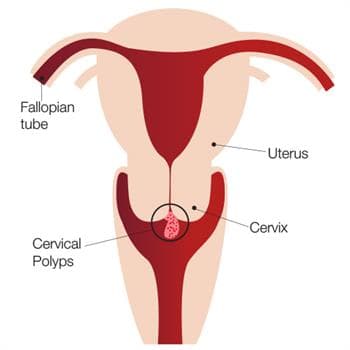
Cervical polyps are smooth, finger-like growths arising from the mucous membrane of the cervical canal. They are almost always benign and are among the most common benign cervical lesions in women of reproductive age — particularly those over 40. Despite their benign nature, they can cause distressing symptoms including chronic discharge, intermenstrual bleeding, and contact bleeding.
At HealthKunj, cervical polyp management is always coordinated with gynaecological care. Constitutional homeopathy is offered as a complement to appropriate gynaecological assessment and treatment, with particular focus on symptom management, reducing discharge, and addressing the constitutional predisposition to recurrence.
Common
most frequently occurring benign cervical lesion in women over 40
Recurrent
tendency to reform after removal without constitutional management
98%
Patient satisfaction at HealthKunj
What Is It?
Cervical polyps arise from the columnar epithelium lining the cervical canal. They are thought to form in response to chronic inflammation, hormonal stimulation, or abnormal localised tissue response. Most are pedunculated — attached by a narrow stalk — and may protrude through the external cervical os. Cervical polyps are distinct from uterine (endometrial) polyps, though both may co-exist.
Endocervical Polyps
Arising from the inner cervical canal, these are the most common type. They are soft, reddish, and friable — prone to bleeding on contact.
Ectocervical Polyps
Arising from the outer surface of the cervix (ectocervix). Less common; they tend to be firmer and paler in appearance.
Recurrent Cervical Polyps
Some women have a persistent constitutional tendency to reform polyps after removal. Constitutional homeopathy is specifically relevant in this pattern.
Common Symptoms
Abnormal vaginal discharge — white, yellow, or mucoid, often between periods
Spotting or light bleeding between menstrual periods (intermenstrual bleeding)
Contact bleeding — spotting after sexual intercourse or internal examination
Postmenopausal bleeding — any bleeding after menopause must be evaluated urgently
Heavier-than-usual menstrual periods associated with a pedunculated polyp
Mild pelvic cramping or discomfort, particularly around menstruation
A visible or palpable fleshy growth protruding from the cervical os — sometimes noticed during routine examination
Recurrent cervical polyps after previous removal
No symptoms at all — many cervical polyps are detected incidentally during routine gynaecological examination
Discomfort during or after pelvic examination or cervical smear
Benefits of Homeopathy for Cervical Polyp
Addresses the Constitutional Tendency to Polyp Formation
Constitutional homeopathy targets the systemic predisposition — including chronic inflammation, hormonal imbalance, and immune dysregulation — that underlies recurrent cervical polyp formation.
Management of Abnormal Discharge
Chronic or recurrent vaginal discharge associated with cervical pathology responds well to constitutional treatment. The character of the discharge — colour, consistency, odour, and timing — is a key guide to remedy selection.
Reduces Risk of Recurrence After Removal
Cervical polyps frequently recur. Constitutional homeopathic treatment during and after gynaecological management aims to reduce the recurrence tendency by addressing the underlying terrain.
Non-Hormonal Complementary Care
For women who prefer to avoid or cannot use hormonal therapies, constitutional homeopathy provides a non-hormonal option that complements conventional gynaecological management safely.
Holistic Symptom Management
Intermenstrual bleeding, discharge, and pelvic discomfort — all common with cervical polyps — are addressed within a single constitutional treatment rather than with multiple separate interventions.
Integrates Safely With Gynaecological Treatment
Whether you are under active gynaecological monitoring, awaiting polypectomy, or recovering after removal, homeopathic treatment can be safely integrated at any stage of your care.
Our Homeopathic Approach
Detailed Gynaecological and Menstrual History
Dr. Thakur takes a thorough history including menstrual cycle characteristics, the nature and timing of any discharge or bleeding, results of cervical smears, and any previous polyp removals. The constitutional history is taken alongside the gynaecological history.
Review of Investigations and Previous Treatment
Colposcopy reports, smear results, and any biopsy findings are reviewed. Dr. Thakur ensures that any red-flag symptoms — particularly postmenopausal bleeding or abnormal smear results — are appropriately referred for gynaecological assessment before homeopathic treatment begins.
Characterisation of Discharge and Bleeding Pattern
In classical homeopathy, the precise character of leucorrhoea and intermenstrual bleeding — timing, colour, consistency, odour, and modalities — is diagnostically important. This guides remedy selection alongside the broader constitutional picture.
Constitutional Remedy Prescription
The remedy is selected on the full constitutional picture — the specific character of the discharge, the menstrual pattern, the emotional and physical constitution, and any associated conditions such as chronic pelvic inflammation or hormonal imbalance.
Follow-Up Aligned with Gynaecological Review
Follow-up appointments are scheduled every 4–6 weeks and co-ordinated with any scheduled gynaecological reviews, smear tests, or repeat colposcopy appointments to ensure integrated care.
Frequently Asked Questions
Can homeopathy remove a cervical polyp?▾
No. Homeopathy does not physically remove polyps. Cervical polyps that are symptomatic, large, or recurrent are appropriately removed by your gynaecologist — a simple and usually well-tolerated outpatient procedure. Constitutional homeopathy works alongside gynaecological management to address symptoms and the underlying predisposition to recurrence.
I have a cervical polyp but no symptoms. Do I still need treatment?▾
Many cervical polyps are discovered incidentally and cause no symptoms. Your gynaecologist will advise whether removal is recommended. If you are in a watchful waiting period, constitutional homeopathy can support general gynaecological health and may be discussed as part of a broader wellness approach.
My cervical polyp keeps coming back. Can homeopathy help?▾
Recurrence is one of the most common challenges with cervical polyps. Constitutional homeopathy aims to address the systemic and local predisposing factors — chronic cervical inflammation, hormonal imbalance, and immune susceptibility — that contribute to recurrent formation.
Is bleeding after sex always caused by a cervical polyp?▾
Post-coital bleeding has several causes — cervical polyps, cervical ectropion, infection, and in some cases, cervical pathology requiring urgent investigation. If you experience post-coital bleeding, a gynaecological assessment is essential before attributing it to any specific cause. Dr. Thakur will always refer appropriately.
How long will homeopathic treatment take?▾
Discharge and intermenstrual spotting often improve within 2–3 menstrual cycles. Constitutional treatment addressing the recurrence tendency typically continues for 9–12 months, with regular review.
Patient Stories
"I had three cervical polyps removed over two years and they kept returning. My gynaecologist suggested I look into constitutional treatment. After seven months at HealthKunj, my last two smear follow-ups have been clear and the chronic discharge I was having has completely stopped."
✓ No recurrence on follow-up, chronic discharge resolved
Priya K., Koregaon Park
7 months"I had constant spotting between periods and it turned out to be a cervical polyp. While my gynaecologist monitored it, I started constitutional homeopathic treatment. The spotting reduced dramatically within two months and the follow-up exam showed the polyp was much smaller."
✓ Intermenstrual spotting resolved, polyp reduced in size
Neha J., Hadapsar
5 monthsWhat to Inform Your Doctor
- 1
Date and findings of your most recent cervical smear (Pap smear or liquid-based cytology)
- 2
Whether you have had a colposcopy — findings and any biopsy results
- 3
Number of polyps previously removed and how frequently they have recurred
- 4
Full description of any vaginal discharge — colour, consistency, quantity, odour, and timing in the cycle
- 5
Pattern of any intermenstrual or post-coital bleeding — when it occurs, quantity, and duration
- 6
Current gynaecological medications or treatments — including any topical treatments or antibiotics
- 7
Full menstrual history — cycle length, duration, flow characteristics
- 8
History of HPV, cervical ectropion, or any previous cervical treatment (e.g., LLETZ, cryotherapy)
- 9
Any postmenopausal bleeding — this always requires urgent gynaecological assessment
- 10
Contraceptive history — including IUD use, which can occasionally be associated with cervical changes
Preparing for Your Appointment
Bring Smear and Colposcopy Reports
All recent cervical smear results and colposcopy reports — including any biopsy letters — should be brought to your first appointment.
Note Polyp History
List dates of any previous polyp removals, size or description given, and whether they recurred and how quickly.
Describe Your Discharge
Note the colour, amount, consistency, odour, and whether it varies through your cycle. This is important constitutional information.
Track Your Menstrual Pattern
Record your cycle length, period duration, flow quantity, and any spotting or bleeding outside your period for at least two cycles before your appointment.
List All Medications
Include all prescribed and over-the-counter medications, supplements, and any topical preparations you currently use.
Allow 60 Minutes
The first gynaecological constitutional consultation takes time. A thorough history is the foundation of accurate prescribing.
Ready to start your healing journey?
Book a consultation with Dr. Meera Thakur at HealthKunj Clinics, Pune.
Book Consultation