
Gastrointestinal Health
Anal Fissures

BHMS — Classical Homeopathic PhysicianPublished 15 Mar 2026· Updated 1 Aug 2026
Heal the sharp, burning pain of anal fissures naturally — homeopathy addresses sphincter spasm, mucosal healing, and the underlying bowel cause simultaneously.
Overview
An anal fissure is a small tear in the thin, moist tissue lining the anus — most commonly caused by passing hard or large stools. While acute fissures often heal with conservative care, chronic fissures (lasting more than 6–8 weeks) develop a cycle of pain, sphincter spasm, and poor blood supply that perpetuates the tear and resists healing. They are more common than generally acknowledged, affecting people across all age groups including new mothers.
Homeopathic treatment for anal fissures addresses three dimensions simultaneously: the local tissue healing, the sphincter spasm, and the underlying bowel dysfunction that caused or perpetuates the fissure. This comprehensive approach is why homeopathy succeeds in cases where topical treatments alone have failed, and why many patients avoid surgery through timely homeopathic care.
80%
Chronic fissures responding to homeopathic treatment
6–12 wks
Typical healing time for chronic fissures
98%
Patient satisfaction at HealthKunj
What Is It?
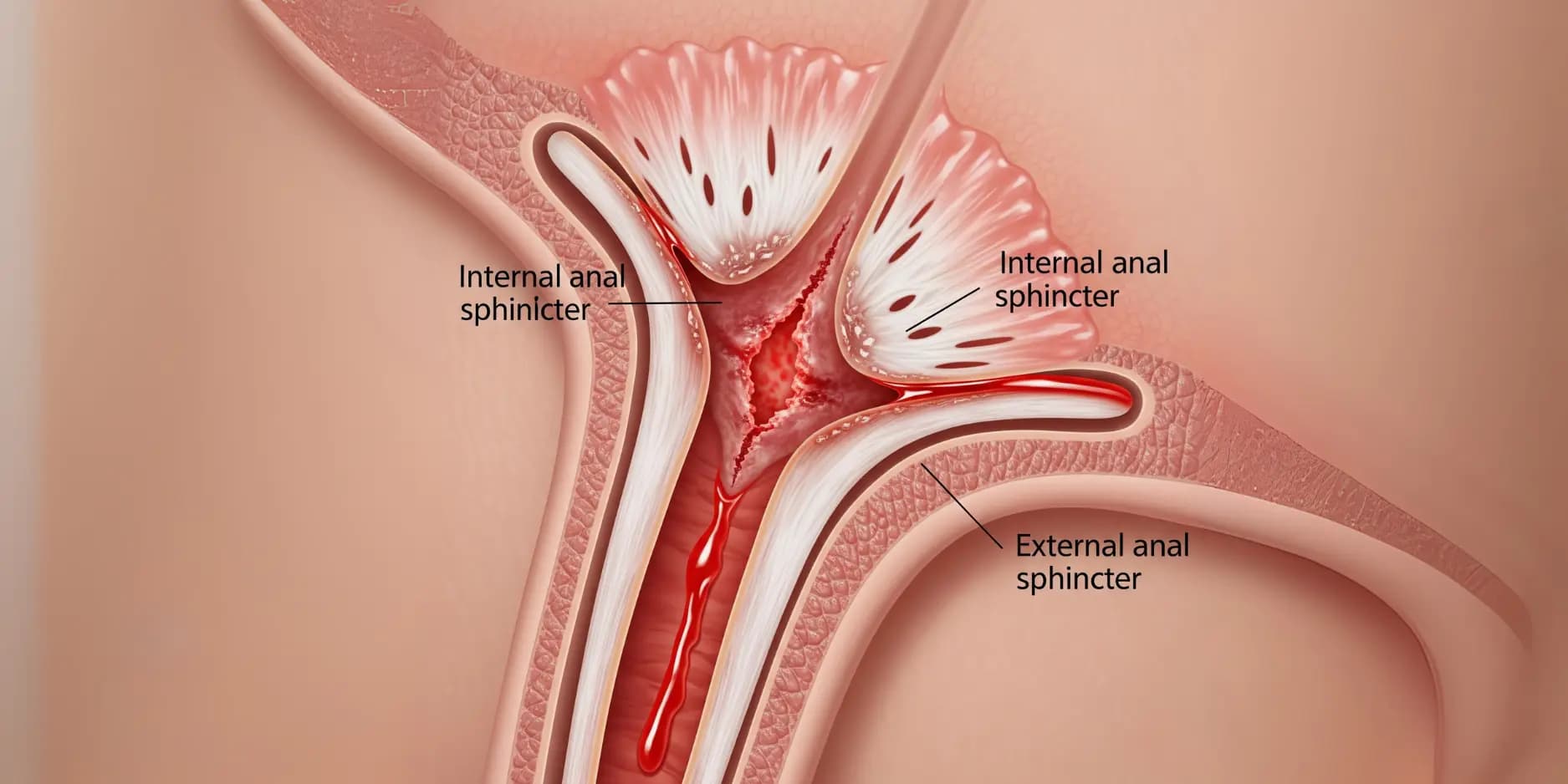
The anal canal is lined with sensitive mucosa and surrounded by the internal and external anal sphincters. When a fissure develops — from hard stool, childbirth trauma, or inflammatory bowel disease — the internal sphincter goes into protective spasm, reducing blood flow to the already damaged tissue and creating a vicious cycle that prevents healing. Understanding this mechanism is key to why local treatment alone is often insufficient.
Acute Fissure
A fresh tear in the anal mucosa, typically healing within 4–6 weeks with dietary measures (fibre, hydration) and local care. Pain is sharp but resolves after passing stool.
Chronic Fissure
Persists beyond 6–8 weeks due to sphincter hypertonia and poor vascularisation. Develops classic features: a sentinel pile distally, a hypertrophied anal papilla proximally, and visible white internal sphincter fibres at the base.
Secondary Fissure
Fissures can occur secondary to Crohn's disease, ulcerative colitis, sexually transmitted infections, or trauma. These require identification and treatment of the underlying condition alongside local care.
Common Symptoms
Sharp, tearing pain during bowel movements
Burning pain lasting minutes to hours after defecation
Bright red blood on stool surface or toilet paper
Visible tear or crack in the skin around the anus
Anal sphincter spasm causing pain and difficulty defecating
Itching or skin irritation around the anal area
Fear of defecating due to anticipated pain
Constipation worsened by avoidance of defecation
Sentinel skin tag or skin fold at fissure site
Difficulty sitting comfortably for extended periods
Benefits of Homeopathy for Fissures
Pain Relief Without Opioids
Homeopathic remedies such as Ratanhia and Nitric Acid specifically address the burning, spasmodic pain of anal fissures — providing relief without the constipating side effects of analgesics.
Promotes Mucosal Healing
Remedies stimulate healing of the torn anal mucosa, improving blood supply to the poorly vascularised internal anal sphincter region where chronic fissures persist.
Reduces Sphincter Spasm
Chronic anal fissures are maintained by internal sphincter hypertonia (spasm). Homeopathy addresses this constitutional spasmodic tendency, facilitating healing that topical treatments alone cannot achieve.
Addresses the Constipation Root
Most fissures are caused or perpetuated by constipation. Constitutional treatment corrects the underlying bowel dysfunction — preventing recurrence rather than just treating the fissure surface.
Avoids Surgical Intervention
Many patients avoid lateral internal sphincterotomy (surgery) through consistent homeopathic treatment. Surgery carries a risk of faecal incontinence — a risk worth avoiding when possible.
Safe During Pregnancy
Anal fissures are common in pregnancy and postpartum. Homeopathic treatment is completely safe for use during pregnancy and breastfeeding, unlike many topical nitrates or calcium channel blockers.
Our Homeopathic Approach
Assessment of Fissure Type and History
We distinguish between acute fissures (recent, treatable with conservative measures) and chronic fissures (sentinel pile, internal sphincter thickening, poor vascularisation). Treatment intensity and duration differ accordingly.
Bowel Function Analysis
Since constipation or diarrhoea almost always underlies fissure development, we thoroughly assess and treat the bowel simultaneously — without correcting this, fissure recurrence is inevitable.
Individualised Remedy Prescription
Ratanhia (burning as if splinters in rectum, hours after defecation), Nitric Acid (fissures with splinter-like pain and bleeding), Graphites (fissures with constipation and anal itching), and Paeonia (fissures with ulceration) are among the key indicated remedies.
Sitz Bath and Local Care Guidance
We recommend warm sitz baths, dietary fibre optimisation, and appropriate perineal hygiene to complement homeopathic treatment and support local healing.
Monitoring and Escalation Planning
We monitor healing progress and coordinate with a colorectal surgeon if there is no response after adequate treatment — ensuring patients receive the right level of care at the right time.
Frequently Asked Questions
Can homeopathy heal a chronic anal fissure without surgery?▾
Yes — many patients with chronic fissures heal completely with constitutional homeopathic treatment, especially when combined with bowel regulation and local care. Surgery becomes necessary when fissures are very deep, complicated, or unresponsive to conservative treatment.
How long does healing take?▾
Acute fissures often improve within 2–4 weeks with the correct remedy. Chronic fissures with sphincter spasm and poor vascularisation typically require 2–4 months of constitutional treatment for complete healing.
Is the pain manageable during treatment?▾
Yes. Homeopathic remedies begin to reduce sphincter spasm and burning pain relatively quickly — often within the first week or two. Warm sitz baths provide immediate symptomatic relief between remedy doses.
Will the fissure come back after homeopathic treatment?▾
If the underlying cause (constipation, hard stools) is also corrected — which is part of our treatment approach — recurrence rates are low. The goal is to restore the whole digestive system, not just treat the fissure locally.
Can I use topical creams alongside homeopathic treatment?▾
Yes. Topical glyceryl trinitrate or diltiazem creams can be used alongside homeopathic treatment and may help in the short term. However, they do not address the constitutional or bowel causes, so long-term benefit requires homeopathic constitutional care.
Are fissures the same as haemorrhoids?▾
No. Fissures are linear tears in the anal lining, causing sharp pain during defecation. Haemorrhoids are swollen vascular cushions that may bleed but typically cause less acute pain. Both conditions can coexist and both are treatable with homeopathy.
Patient Stories
"The pain every time I went to the toilet was unbearable. My surgeon wanted to operate but I tried homeopathy first. Within six weeks the pain had reduced by 80% and within four months the fissure was completely healed."
✓ Complete fissure healing; surgery avoided
Rekha Shirke
Patient since 2022, Magarpatta"I had a fissure for over two years and had tried every cream prescribed. Dr. Meera treated both my constipation and the fissure together — that combination finally worked when nothing else had."
✓ Chronic fissure healed after 3 months; constipation fully resolved
Abhijit Naik
Patient since 2023, BanerWhat to Inform Your Doctor
- 1
Duration of the fissure — how long you have had it and whether it recurred
- 2
Nature of pain: when it occurs, how long it lasts, and how severe
- 3
Bleeding: how much and when (during or after defecation)
- 4
Any previous treatments tried: topical creams, injections, previous surgery
- 5
Your current bowel habits: frequency, stool consistency, and any straining
- 6
Any associated haemorrhoids, skin tags, or perianal skin conditions
- 7
History of diarrhoeal illnesses that may have triggered the fissure
- 8
Current medications including stool softeners or laxatives
- 9
Pregnancy or recent childbirth if applicable
Preparing for Your Appointment
Any Previous Proctoscopy Reports
Bring any colorectal or proctoscopy findings if you have had a formal examination of the fissure.
List All Topical and Oral Medications
Include any prescribed creams (GTN, diltiazem), stool softeners, and pain medications.
Pain and Bowel Diary
Track pain severity after each bowel movement and stool consistency for the week before your appointment.
Dietary Habits
Note your typical fibre intake, fluid consumption, and any dietary triggers for hard stools.
Allow 45 Minutes
Your first appointment covers your full gastrointestinal and constitutional history.
Describe the Pain Precisely
The exact character of the pain (burning, splinter-like, cramping) and its timing are crucial for accurate remedy selection.
Ready to start your healing journey?
Book your consultation with Dr. Meera Thakur at HealthKunj Clinics, Pune.
Book Your Consultation