
More Treatments
Kidney Problems — CKD Supportive Care

BHMS — Classical Homeopathic PhysicianPublished 15 Mar 2026· Updated 1 Aug 2026
Chronic kidney disease (CKD) requires expert nephrology management. At HealthKunj, constitutional homeopathy is offered as supportive adjunctive care — improving quality of life, managing uraemic symptoms, and supporting emotional wellbeing alongside, not in place of, specialist renal care.
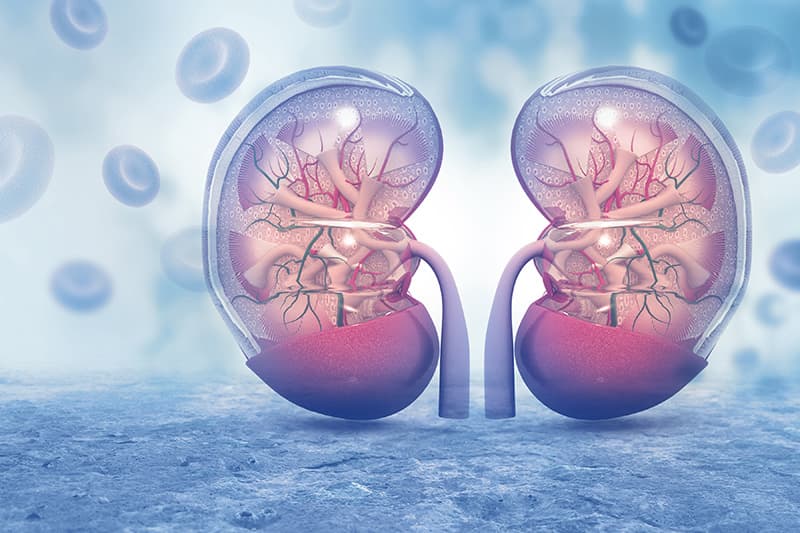
Overview
Chronic kidney disease affects approximately 17% of India's adult population, with diabetic nephropathy and hypertension as the leading causes. CKD is defined by persistently reduced kidney function (eGFR below 60 mL/min/1.73m²) and/or evidence of kidney damage lasting more than 3 months.
Conventional nephrology manages the progression of CKD through blood pressure control, blood glucose management, dietary modification, and — in advanced stages — dialysis or transplantation. Constitutional homeopathy at HealthKunj is offered as a supportive complement to this essential framework — focusing on symptom relief, quality of life, and holistic wellbeing for patients living with this challenging condition.
17%
of Indian adults estimated to have CKD
1 in 3
diabetic patients develop diabetic nephropathy
98%
Patient satisfaction at HealthKunj
What Is It?
The kidneys filter approximately 180 litres of blood daily, removing waste products, regulating fluid balance, controlling blood pressure, and producing hormones including erythropoietin. CKD progresses through five stages based on eGFR (estimated glomerular filtration rate):
Stages 1–2 (eGFR 60–89+)
Kidney damage present but function largely maintained. Often asymptomatic. Early intervention — blood pressure control, dietary modification — is most effective at this stage.
Stages 3–4 (eGFR 15–59)
Moderate to severe reduction in kidney function. Symptoms including fatigue, oedema, anaemia, and uraemic symptoms become increasingly prominent. Constitutional homeopathy provides meaningful supportive benefit at these stages.
Stage 5 — End-Stage Renal Disease (eGFR below 15)
Dialysis or transplantation is required. Constitutional homeopathy can still support quality of life and symptom management as an adjunct to renal replacement therapy.
Common Symptoms
Fatigue and weakness — one of the earliest and most debilitating symptoms of declining kidney function
Ankle and lower leg swelling (oedema) — due to fluid retention as kidney filtration declines
Reduced urine output or changes in urine frequency — foamy urine suggests protein loss
Nocturia — waking multiple times at night to urinate, often an early sign of CKD
Nausea and poor appetite — from accumulation of waste products (uraemia) in the blood
Itching (uraemic pruritus) — diffuse, difficult-to-relieve itching from phosphate and toxin accumulation
Hypertension — both a cause and consequence of progressive kidney disease
Anaemia-related symptoms — pallor, breathlessness, and fatigue from reduced erythropoietin production
Muscle cramps and restless legs — from electrolyte imbalances including calcium and phosphate
Reduced mental clarity and concentration — cognitive effects of uraemia
Dry skin and reduced skin elasticity — common in advanced CKD
Bone pain and reduced bone density — from secondary hyperparathyroidism in CKD
Benefits of Homeopathy for Kidney Problems
Supportive Constitutional Care — Within Nephrology Framework
Homeopathic treatment for kidney disease at HealthKunj is offered exclusively as supportive adjunctive care alongside nephrology management. Patients must continue all prescribed medications and nephrology follow-up without interruption.
Reduction of Uraemic Symptoms
Symptoms such as fatigue, nausea, poor appetite, itching, and restless legs — which significantly impair quality of life in CKD — often respond to constitutional homeopathic treatment, improving daily functioning even when GFR cannot be improved.
Management of Oedema and Fluid Retention
Constitutional homeopathy can support the management of mild oedema associated with early-to-moderate CKD alongside appropriate dietary sodium restriction and medical management.
Support for Associated Hypertension
High blood pressure is the most important modifiable risk factor in CKD progression. Constitutional homeopathy is used adjunctively alongside antihypertensive medications — never as a substitute — to support cardiovascular and renal health.
Quality of Life and Emotional Wellbeing
Living with chronic kidney disease is psychologically demanding. Constitutional homeopathy addresses the whole person — fatigue, anxiety, depression, and the emotional burden of managing a progressive condition — alongside physical symptom management.
Safe With All Nephrology Medications
Homeopathic remedies are excreted minimally by the kidneys and carry no nephrotoxic risk. They are safe alongside ACE inhibitors, ARBs, diuretics, erythropoietin, phosphate binders, and all other standard CKD medications.
Our Homeopathic Approach
Full Review of Renal Function and Medical History
Dr. Thakur reviews the patient's CKD stage (GFR category), underlying cause of kidney disease, recent renal blood tests (creatinine, urea, eGFR, electrolytes), urine protein measurements, and all current nephrology management.
Symptom Burden Assessment
The specific symptom burden — fatigue severity, oedema, itch, nausea, sleep disruption, and mood — is carefully documented. These are the primary targets of constitutional homeopathic treatment alongside standard medical care.
Constitutional Remedy Selection
The remedy is selected based on the individual's unique constitutional type, the specific character of renal symptoms, associated systemic features, and the emotional and psychological dimensions of living with CKD.
Coordination with Nephrologist
Homeopathic treatment is offered as a transparent adjunct to the patient's nephrology care. Dr. Thakur never advises changes to nephrology medications or dialysis schedules, and refers any concerns about renal function promptly to the specialist.
Regular Follow-Up and Renal Monitoring
Renal function tests and symptom assessment are reviewed regularly alongside nephrology monitoring. Constitutional treatment is adjusted as the patient responds. Any deterioration in renal function is discussed immediately with the nephrology team.
Frequently Asked Questions
Can homeopathy improve kidney function or GFR?▾
Homeopathy is offered as supportive care for symptoms and quality of life, not as a treatment to reverse CKD or improve GFR. The management of CKD — addressing the underlying cause, controlling blood pressure and blood glucose, and monitoring renal function — must be led by a nephrologist. Constitutional treatment works within this framework.
Is homeopathy safe for patients with reduced kidney function?▾
Yes — homeopathic remedies are prescribed in highly dilute forms and have no nephrotoxic effects. They are significantly safer than NSAIDs, certain antibiotics, and other medications that are contraindicated in CKD. Always inform your nephrologist about any complementary treatments you are using.
Can homeopathy help with the itching and fatigue of CKD?▾
Yes — uraemic pruritus and fatigue are among the most distressing quality-of-life symptoms in CKD and are often inadequately managed by conventional means. Constitutional homeopathic treatment targeting these specific symptoms has helped many patients experience meaningful relief.
I am on dialysis. Can I still have homeopathic treatment?▾
Yes — constitutional homeopathic treatment can be offered to dialysis patients for symptom management and quality of life support. Treatment is tailored carefully to the patient's specific needs and always complementary to dialysis and all nephrology care.
Can homeopathy prevent CKD progression?▾
The primary determinants of CKD progression — blood pressure control, blood glucose management, proteinuria reduction, and treatment of the underlying cause — are the domain of nephrology. Constitutional homeopathic treatment may support overall health and wellbeing but cannot substitute for nephrology-directed disease management.
My kidney disease is due to diabetes. Can homeopathy help?▾
Constitutional homeopathic treatment can address the broader constitutional pattern — including the diabetic and metabolic context of diabetic nephropathy — as a supportive adjunct. Strict blood glucose and blood pressure control under your physician's guidance remain the most important factors in slowing progression.
Patient Stories
"I have stage 3 CKD and the fatigue and itching were making life miserable. My nephrologist has my medications well managed but couldn't do much about the symptoms. After eleven months of constitutional treatment the itching has reduced to the point where I can sleep through the night, and my energy is noticeably better. My creatinine has remained stable."
✓ Significant reduction in uraemic itch and improved energy — stable creatinine
Ramesh B., Wanowrie
11 months"The nausea and loss of appetite from my kidney problems had me eating almost nothing. After two months of constitutional treatment the nausea started lifting, and by eight months my appetite had returned substantially. My nephrologist was pleased and my nutritional blood markers have improved."
✓ Resolved nausea and restored appetite with improving nutritional markers
Lata V., Pimpri
8 monthsWhat to Inform Your Doctor
- 1
CKD stage and underlying cause — diabetic nephropathy, hypertensive nephrosclerosis, glomerulonephritis, or other
- 2
Most recent renal blood tests — creatinine, urea, eGFR, electrolytes (potassium, phosphate, bicarbonate)
- 3
Urine protein — 24-hour urinary protein or urine albumin-to-creatinine ratio (ACR)
- 4
Current nephrologist and frequency of specialist follow-up
- 5
All current medications — ACE inhibitors, ARBs, diuretics, phosphate binders, erythropoietin, antihypertensives
- 6
Dialysis status — if on haemodialysis or peritoneal dialysis, frequency and schedule
- 7
Symptom burden — fatigue severity, oedema, itching, nausea, sleep disturbance on a 1–10 scale
- 8
Blood pressure readings — home readings and clinic measurements, and blood pressure targets
- 9
Dietary restrictions — renal diet details including protein, potassium, phosphate, and sodium restrictions
- 10
Comorbid conditions — diabetes, hypertension, cardiovascular disease, and their management
Preparing for Your Appointment
Bring All Recent Renal Blood Test Reports
Creatinine, eGFR, urea, electrolytes, and urine protein results from the last 3 months are essential for understanding your current renal status.
Bring a Complete Medication List
Renal patients are typically on multiple medications. A complete and current list — including doses — is critical for safe, complementary prescribing.
Note Your Nephrologist's Current Plan
If you have recent nephrology clinic letters or test result summaries, bring these. Understanding your specialist's current management plan helps Dr. Thakur work within it safely.
Rate Your Symptom Severity
Score your main symptoms — fatigue, itch, nausea, oedema, sleep — on a scale of 1–10. This provides a baseline to measure improvement against at each follow-up.
Note Your Renal Dietary Restrictions
Renal diet restrictions (protein, potassium, phosphate, sodium) are important context for constitutional assessment and dietary guidance.
Allow 75 Minutes
CKD is complex and multisystem. A thorough constitutional and medical history requires adequate time. Please allow 75 minutes for your first consultation.
Ready to start your healing journey?
Book your consultation with Dr. Meera Thakur at HealthKunj Clinics, Pune.
Book Your Consultation