
Skin Condition
Homeopathic Medicine for Chilblains — Causes and Care

BHMS — Classical Homeopathic PhysicianPublished 15 Mar 2026· Updated 1 Aug 2026
Constitutional homeopathic treatment to relieve the burning itch of chilblains and correct the underlying vascular sensitivity that makes cold weather a source of suffering every winter.
Overview
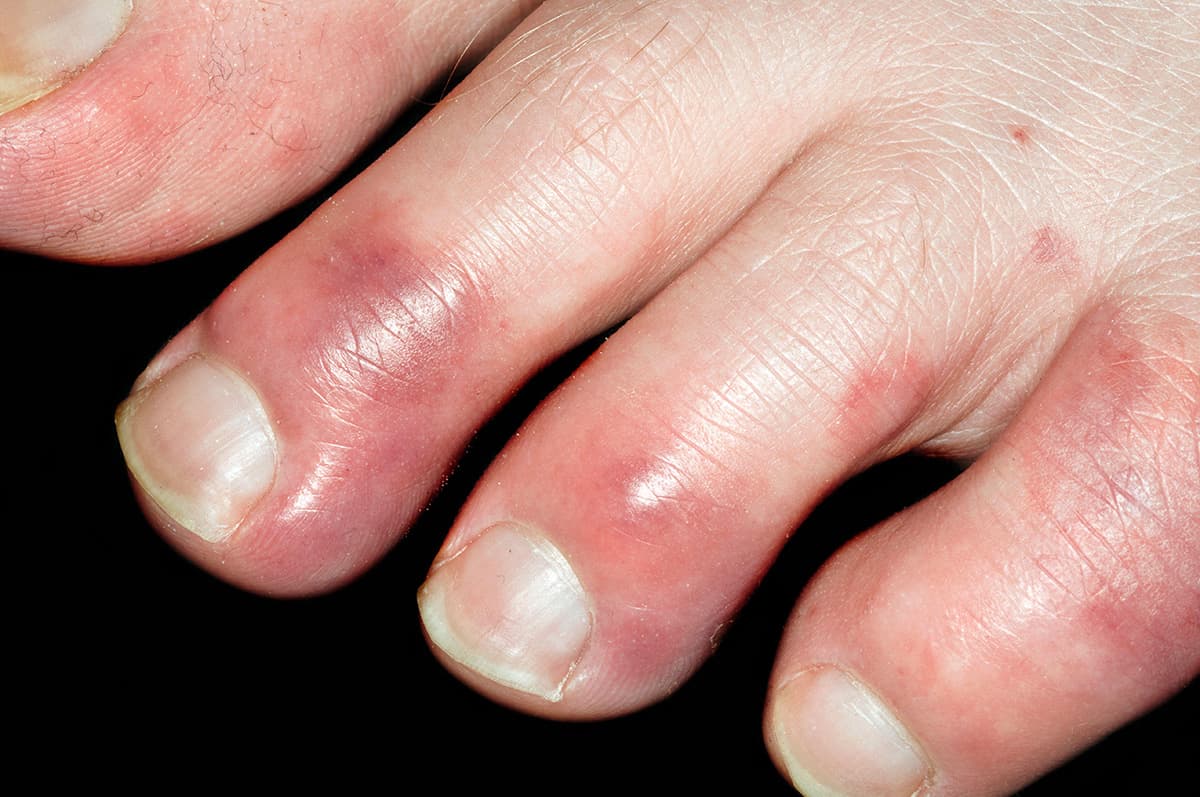
Chilblains, medically termed pernio, are localised inflammatory lesions triggered by abnormal vascular responses to cold and damp weather. The condition affects exposed or poorly protected extremities — fingers, toes, heels, ears — and causes painful, itching, red-purple swellings that blister or ulcerate in severe cases. While chilblains are not life-threatening, the annual recurrence pattern and progressive sensitivity make them significantly disruptive for affected individuals.
Homeopathy offers one of the most effective long-term solutions for chilblains by addressing the constitutional circulatory predisposition rather than simply managing symptoms each winter. At HealthKunj, Dr. Meera Thakur has helped numerous patients break their cycle of annual chilblain attacks through carefully selected constitutional remedies.
1–2 winters
Typical treatment period for lasting prevention
3–5 days
Acute itch relief with correct homeopathic remedy
98%
Patient satisfaction at HealthKunj
What Is It?
Chilblains develop when peripheral blood vessels — the tiny capillaries in skin — constrict excessively in response to cold and then dilate abnormally upon rewarming. This abnormal vasomotor response causes plasma to leak into surrounding tissue, producing the characteristic swelling, redness, itching, and burning. The predisposition is partly genetic and partly related to circulatory health, autoimmune status, and nutritional state.
Vasospastic Mechanism
Cold triggers excessive vasoconstriction in susceptible individuals. On rewarming, abrupt vasodilation causes inflammatory mediator release and tissue edema — the physiological basis of chilblain pain and swelling.
Associated Conditions
Chilblain lupus, Raynaud's phenomenon, antiphospholipid syndrome, and hypothyroidism all predispose to recurrent severe chilblains. These require investigation and concurrent management.
Homeopathic View
From a homeopathic perspective, chilblains represent a disordered vital response to cold stress. The body's regulatory systems — particularly microvascular control and immune regulation — require constitutional strengthening for lasting resolution.
Common Symptoms
Red or purple swollen patches on fingers, toes, heels, or earlobes
Intense itching and burning on rewarming cold extremities
Small blisters or ulcers on affected skin in severe cases
Extreme sensitivity to cold temperatures triggering attacks
Skin that turns white then red then purple with temperature change
Painful inflammation lasting several days after cold exposure
Recurrence every winter with progressively worsening episodes
Associated Raynaud's phenomenon or peripheral circulatory coldness
Cracks and fissures in chronically affected skin
Discomfort even in mild cool weather due to heightened sensitivity
Benefits of Homeopathy for Chilblains
Improves Peripheral Circulation
Homeopathic remedies such as Agaricus, Pulsatilla, and Secale Cornutum improve microvascular tone and reduce the abnormal vasospastic response to cold.
Breaks the Annual Recurrence Cycle
Constitutional treatment addresses the vascular and immune predisposition so that patients experience progressively milder winters and eventually no chilblains at all.
Relieves Itch and Burning Rapidly
Targeted remedies provide relief from the distressing burning-itch sensation that accompanies rewarming, often within days of starting treatment.
Promotes Ulcer and Blister Healing
Where chilblains have progressed to ulceration, remedies such as Petroleum and Graphites support skin repair without infection risk from topical chemicals.
Addresses Associated Conditions
Patients with coexisting Raynaud's phenomenon, hypothyroidism, or poor nutrition receive constitutional treatment that improves their overall vascular health.
No Blood Thinners Required
Unlike conventional management with vasodilator medication, homeopathy achieves circulatory improvement without the side effects of blood pressure medication.
Our Homeopathic Approach
Circulatory & Constitutional Assessment
Dr. Meera evaluates the severity of cold sensitivity, affected sites, past history of Raynaud's or autoimmune conditions, thyroid function, and nutritional status — all factors that determine chilblains susceptibility.
Remedy Differentiation
Key remedies are carefully differentiated: Agaricus for burning-itching chilblains worse on warming, Pulsatilla for shifting pains with emotional sensitivity, Secale for burning with desire for cold, and Petroleum for cracks and chronic skin changes.
Pre-Winter Prophylactic Treatment
Ideally, constitutional treatment is initiated in autumn before the cold season begins. This prophylactic approach significantly reduces the incidence and severity of winter attacks.
Acute Attack Management
During active chilblains episodes, low-potency frequent doses of the similimum provide rapid relief. Patients are guided on cold avoidance, gradual rewarming techniques, and protective clothing.
Nutritional & Lifestyle Support
Guidance on Vitamin D optimisation, iron status, and smoking cessation (which worsens vasospasm) complements homeopathic treatment for comprehensive circulatory improvement.
Frequently Asked Questions
What causes chilblains?▾
Chilblains (pernio) occur when small blood vessels in the skin react abnormally to cold temperatures, constricting excessively and then dilating rapidly on rewarming. This abnormal microvascular response causes inflammation, swelling, and itching. Genetic predisposition, poor circulation, autoimmune conditions, and nutritional deficiencies all increase susceptibility.
Are chilblains the same as frostbite?▾
No. Frostbite involves actual freezing of tissue and occurs at much lower temperatures. Chilblains develop at cool but above-freezing temperatures (typically 0–10°C) in susceptible individuals. The mechanism is vasospasm-driven inflammation rather than tissue freezing.
Can homeopathy prevent chilblains from returning each winter?▾
Yes. This is one of the most rewarding outcomes of constitutional homeopathic treatment. Patients who have suffered chilblains for years often find that after one to two seasons of constitutional treatment, they no longer develop the condition even during cold winters.
When should I start treatment to prevent winter chilblains?▾
Ideally 4–6 weeks before the cold season begins — typically in September or October for patients in Pune who travel to cold regions. Constitutional treatment initiated in autumn has the best preventive effect.
Is there any risk of ulcers becoming infected?▾
Chilblain ulcers can become infected if left untreated. While homeopathy promotes healing of existing ulcers, any signs of spreading redness, pus, or fever warrant conventional evaluation. Dr. Meera will advise appropriate wound care alongside homeopathic treatment.
Do chilblains indicate an underlying condition?▾
Recurrent or severe chilblains can be associated with lupus (chilblain lupus), antiphospholipid syndrome, Raynaud's phenomenon, hypothyroidism, or anaemia. Dr. Meera screens for these conditions and may advise blood tests to rule them out before prescribing constitutionally.
Patient Stories
"Every winter without fail my fingers and toes would swell and itch unbearably. I dreaded cold weather. After constitutional treatment at HealthKunj last autumn, this winter was the first in eight years when I had almost no chilblains. I could not believe the difference."
✓ Chilblains prevented through winter; cold tolerance markedly improved
Kavita Patil
Treated Aug–Dec"My feet would crack and blister every December. Nifedipine tablets gave me headaches and I hated taking them. Dr. Meera's homeopathic treatment improved my circulation gradually. The blistering stopped completely this season."
✓ Blistering resolved; able to discontinue nifedipine after 3 months
Vikram Bhole
Treated Oct–JanWhat to Inform Your Doctor
- 1
Which body parts are affected — fingers, toes, ears, nose, or heels
- 2
Exact temperature or weather conditions that trigger an attack
- 3
Whether you have Raynaud's phenomenon or a confirmed autoimmune condition
- 4
History of thyroid disorders, anaemia, or poor circulation
- 5
Smoking history — smoking significantly worsens peripheral circulation
- 6
All medications being taken including vasodilators or blood thinners
- 7
Nutritional supplements currently being taken (Vitamin D, iron, B12)
- 8
Severity — do the chilblains blister or ulcerate, or remain as red swollen patches
- 9
Whether both hands and feet are affected simultaneously or only one site
Preparing for Your Appointment
Photograph Affected Areas
Document the swelling, colour changes, and any blisters or cracks clearly before your appointment so Dr. Meera can assess severity accurately.
Record Trigger Temperatures
Note the approximate temperature or weather conditions (cold wind, rain, air conditioning) that reliably trigger your chilblains episodes.
Bring Blood Test Reports
If you have had tests for thyroid function, ANA (lupus screen), iron studies, or Vitamin D, bring these reports as they inform the constitutional prescription.
Document Seasonal Pattern
Note how many winters you have had chilblains and whether they are getting progressively worse — this indicates the pace of constitutional treatment needed.
List All Current Medications
Include any calcium channel blockers, blood pressure medications, or supplements you use during winter months to manage circulation.
Describe Sensations Precisely
Note the exact feeling — burning, itching, throbbing, or numbness — and whether warmth relieves or worsens the sensation, as these modalities are critical for remedy selection.
Ready to start your healing journey?
Book your consultation with Dr. Meera Thakur at HealthKunj Clinics, Pune.
Book Your ConsultationTwo ways to consult for Chilblains
Dr. Meera Thakur sees patients in person at our Kharadi clinic in Pune, and online by video anywhere in India.
In-clinic — Kharadi, Pune
First Floor, Blue Berry Society, 4, Blue Berry Rd, Tulaja Bhawani Nagar, Kharadi, Pune, Maharashtra 411014
Mon–Sat: 10:30 AM – 2:00 PM & 5:30 PM – 8:30 PM · Sunday: Closed
Book a clinic visitOnline — anywhere in India
A video consultation with the same detailed case-taking as an in-clinic visit. Medicines are couriered to your address.
Book an online consultation