
Skin / Eye Condition
Chalazion Eyelid Cyst

BHMS — Classical Homeopathic PhysicianPublished 15 Mar 2026· Updated 1 Aug 2026
Homeopathic treatment to dissolve meibomian gland cysts naturally — avoiding surgery and preventing the recurrent chalazia that affect many patients despite repeated drainage procedures.
Overview
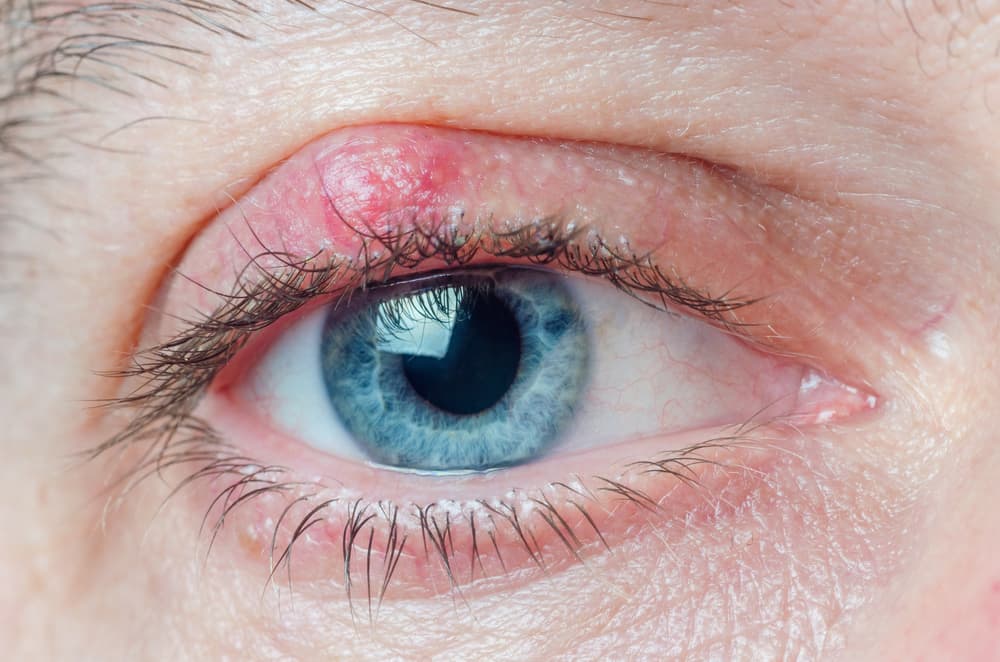
A chalazion is a chronic inflammatory lipogranuloma of the meibomian glands — the oil-secreting glands that line the inner eyelid margin. When a gland's duct becomes blocked, the retained secretions trigger a localised granulomatous reaction, forming a firm, painless lump that grows slowly over weeks to months. Unlike a stye, a chalazion is typically not infected and does not resolve on its own without treatment.
At HealthKunj, Dr. Meera Thakur has a strong track record of resolving chalazia through constitutional homeopathic treatment — including cases that had previously recurred after multiple surgical drainages. By treating the meibomian gland dysfunction and constitutional predisposition underlying the chalazion, we achieve not just resolution but lasting prevention of recurrence.
4–8 wks
Onset of visible size reduction
3–6 mo
Complete resolution in most cases
98%
Patient satisfaction at HealthKunj
What Is It?
Each eyelid contains approximately 25–40 meibomian glands that secrete the oily outer layer of the tear film. When a duct becomes blocked — due to thickened secretions, blepharitis, or reduced blinking — retained meibum triggers a granulomatous inflammatory response, forming a chalazion. The process is chronic and the lump continues to grow unless the gland is unblocked and the inflammation resolved.
Meibomian Gland Dysfunction
The root cause of most chalazia. Abnormally viscous gland secretions — often due to diet, rosacea, contact lens wear, or blepharitis — block duct openings and initiate cyst formation. Addressing this dysfunction prevents recurrence.
Granulomatous Inflammation
The body attempts to contain the retained fatty secretion by encapsulating it in a granuloma — a collection of immune cells. This is why chalazia are firm and slow to resolve without targeted treatment.
Constitutional Susceptibility
Not everyone with meibomian gland dysfunction develops chalazia — constitutional predisposition determines who forms granulomas. Homeopathy identifies and corrects this constitutional tendency for durable resolution.
Common Symptoms
Painless or mildly tender firm lump in the upper or lower eyelid
Gradually enlarging swelling over weeks to months
Blurring of vision if the cyst is large enough to press on the cornea
Eyelid heaviness and drooping in large chalazia
Redness and irritation if the chalazion becomes inflamed (acute chalazion)
History of a stye that did not fully resolve and became a hard lump
Multiple chalazia appearing in the same or different eyelids
Recurrence after surgical drainage or steroid injection
Associated blepharitis or meibomian gland dysfunction
Eye watering and discomfort from gland blockage
Benefits of Homeopathy for Chalazion
Dissolves Cysts Without Surgery
Homeopathic remedies — particularly Silicea, Conium, and Thuja — promote gradual absorption of the granulomatous cyst without the need for incision and curettage.
Prevents Recurrence After Surgery
Patients who have had repeated surgical drainage of chalazia benefit enormously from constitutional treatment that corrects the meibomian gland dysfunction causing repeated cyst formation.
Safe for Children and Elderly
Surgical drainage under local anaesthetic is particularly distressing for children. Homeopathic treatment provides a stress-free, safe alternative that avoids any anaesthetic risk.
Addresses Meibomian Gland Health
Constitutional remedies improve the quality of meibomian gland secretions, reducing the viscous plugging that leads to cyst formation and maintaining long-term eyelid gland health.
Avoids Steroid Injection Side Effects
Triamcinolone injections into chalazia carry risks of skin depigmentation and fat atrophy. Homeopathy achieves comparable or superior results without these cosmetically important side effects.
Treats Associated Blepharitis
Most patients with chalazia have concurrent meibomian gland dysfunction or blepharitis. Constitutional homeopathy addresses both conditions simultaneously, improving overall eyelid health.
Our Homeopathic Approach
Eyelid & Gland Assessment
Dr. Meera carefully assesses the chalazion's size, location, duration, and whether it is causing visual disturbance or significant cosmetic concern — factors that determine the urgency and approach of treatment.
Differentiation from Stye and Malignancy
Chalazion must be distinguished from a recurrent stye and — importantly — from sebaceous gland carcinoma in older patients with recurring lid lesions. Any suspicious features prompt appropriate ophthalmological referral.
Constitutional Remedy Prescription
Silicea for slowly maturing cysts in chilly, timid individuals; Conium for hard, slow-growing glandular swellings; Thuja for multiple lipoma-like growths; Graphites for chronic gland dysfunction with thick secretions — the remedy is matched to the whole patient.
Warm Compress & Eyelid Hygiene Protocol
Daily warm compresses (5 minutes, twice daily) to liquefy meibum combined with gentle lid massage and cleansing form an essential adjunct to homeopathic treatment and accelerate gland clearing.
Long-Term Gland Health Management
After chalazion resolution, omega-3 supplementation and ongoing eyelid hygiene prevent meibomian gland plugging. Constitutional remedies are continued at reducing frequency for 3–6 months post-resolution.
Frequently Asked Questions
How long does a chalazion take to resolve with homeopathy?▾
Small, recent chalazia often resolve within 4–8 weeks of homeopathic treatment. Large or longstanding cysts may require 3–6 months of constitutional treatment. The process is gradual but patients notice progressive softening and size reduction throughout.
Will I definitely need surgery?▾
No. Many chalazia resolve spontaneously with warm compresses alone, and homeopathic treatment significantly increases this resolution rate. Surgery is needed only for very large chalazia causing visual problems or cosmetic disfigurement unresponsive to conservative management.
Can a chalazion come back after homeopathic treatment?▾
Constitutional homeopathic treatment that addresses the underlying meibomian gland dysfunction dramatically reduces recurrence rates. Patients who previously had chalazia every few months often remain recurrence-free for years after completing constitutional treatment.
Is there any danger in delaying surgery for homeopathic treatment?▾
For most chalazia, a 4–8 week trial of conservative management (warm compresses and homeopathy) is entirely safe. However, if vision is significantly affected, Dr. Meera will advise appropriate ophthalmological consultation without delay.
My chalazion came back 3 times after surgery. Why?▾
Recurrence after surgery indicates untreated meibomian gland dysfunction — the underlying gland disease that causes chalazia is not addressed by surgical drainage. Constitutional homeopathic treatment corrects this underlying gland pathology.
Is chalazion the same as a cyst?▾
A chalazion is a lipogranuloma — a specific type of chronic inflammatory granuloma — that forms when blocked meibomian gland secretions trigger a granulomatous reaction. It is not a simple cyst but is commonly referred to as an eyelid cyst due to its appearance and feel.
Patient Stories
"I had a large chalazion on my upper eyelid for six months. My ophthalmologist wanted to do surgery under general anaesthesia. I wanted to try something else first and came to HealthKunj. By the third month the swelling had halved and by five months it had completely gone. No surgery needed."
✓ Large chalazion fully resolved in 5 months without surgical intervention
Ananya Joshi
Treated Jan–May"This was my fourth chalazion in three years — the previous three were all drained surgically. Dr. Meera explained why they kept coming back and treated me constitutionally. It has been eight months and no new chalazion has appeared. That's a record for me."
✓ Chalazion resolved and recurrence cycle broken for 8+ months
Deepak Bhosale
Treated Mar–JunWhat to Inform Your Doctor
- 1
How long the chalazion has been present and whether it is getting larger, smaller, or unchanged
- 2
History of previous chalazia and how many surgeries or steroid injections you have had
- 3
Whether you have blepharitis, dry eyes, or rosacea — all associated with meibomian gland dysfunction
- 4
Whether vision is affected by the current chalazion
- 5
All eye drops and ointments currently being used
- 6
Omega-3 supplement intake — these directly influence meibomian gland secretion quality
- 7
Contact lens wear history, as contact lenses aggravate meibomian gland dysfunction
- 8
Whether the chalazion is painful (suggesting secondary infection) or entirely painless
- 9
Whether multiple eyelids are affected simultaneously or sequentially
Preparing for Your Appointment
Photograph Eyelid Clearly
Take a clear close-up photo of the affected eyelid in good natural light before your appointment to document the size and location of the chalazion.
Begin Warm Compresses
Start warm compresses (a clean cloth soaked in warm water) for 5 minutes twice daily before your appointment — this begins the treatment process and also demonstrates how the chalazion responds to warmth.
Bring Previous Eye Reports
Any ophthalmologist letters, surgical notes from previous chalazion drainage, or reports of steroid injections help Dr. Meera understand the recurrence pattern and severity.
List All Eye Medications
Note all current eye drops, ointments, lid scrubs, and oral medications being used for any eye condition.
Note Visual Impact
Observe whether your vision is blurred with or without glasses when looking through the affected eyelid — this is important for determining urgency of treatment.
Record Associated Symptoms
Note any eyelid itching, crusting on waking, foreign body sensation, or excessive eye watering — these indicate associated blepharitis that will be treated concurrently.
Ready to start your healing journey?
Book your consultation with Dr. Meera Thakur at HealthKunj Clinics, Pune.
Book Your ConsultationTwo ways to consult for Chalazion
Dr. Meera Thakur sees patients in person at our Kharadi clinic in Pune, and online by video anywhere in India.
In-clinic — Kharadi, Pune
First Floor, Blue Berry Society, 4, Blue Berry Rd, Tulaja Bhawani Nagar, Kharadi, Pune, Maharashtra 411014
Mon–Sat: 10:30 AM – 2:00 PM & 5:30 PM – 8:30 PM · Sunday: Closed
Book a clinic visitOnline — anywhere in India
A video consultation with the same detailed case-taking as an in-clinic visit. Medicines are couriered to your address.
Book an online consultation