
Skin
Homeopathic Medicine for Skin Allergy — Skin Allergy & Urticaria

BHMS — Classical Homeopathic PhysicianPublished 15 Mar 2026· Updated 1 Aug 2026
Urticaria, hives, and contact dermatitis reflect an immune system reacting disproportionately to its environment. Constitutional homeopathy addresses this underlying hypersensitivity — aiming not just to suppress symptoms but to reduce the allergic reactivity itself over time.
Overview
Allergic skin conditions affect over 20% of the global population, with urticaria alone affecting approximately 15–25% of people at some point in their lives. In India, increasing environmental pollution, dietary changes, and synthetic chemical exposure have led to a significant rise in allergic skin disorders across all age groups.
Conventional management centres on antihistamines and, in severe cases, corticosteroids — both of which suppress symptoms but do not modify the underlying immune hypersensitivity. Constitutional homeopathy offers a deeper approach, aiming to recalibrate immune reactivity over time so that the body no longer responds disproportionately to everyday triggers.
15–25%
of people experience urticaria at some point
40%
of chronic urticaria cases have no identifiable trigger
98%
Patient satisfaction at HealthKunj
What Is It?
Skin allergy encompasses a spectrum of immune-mediated reactions affecting the skin. The most common presentations treated at HealthKunj include:
Urticaria (Hives)
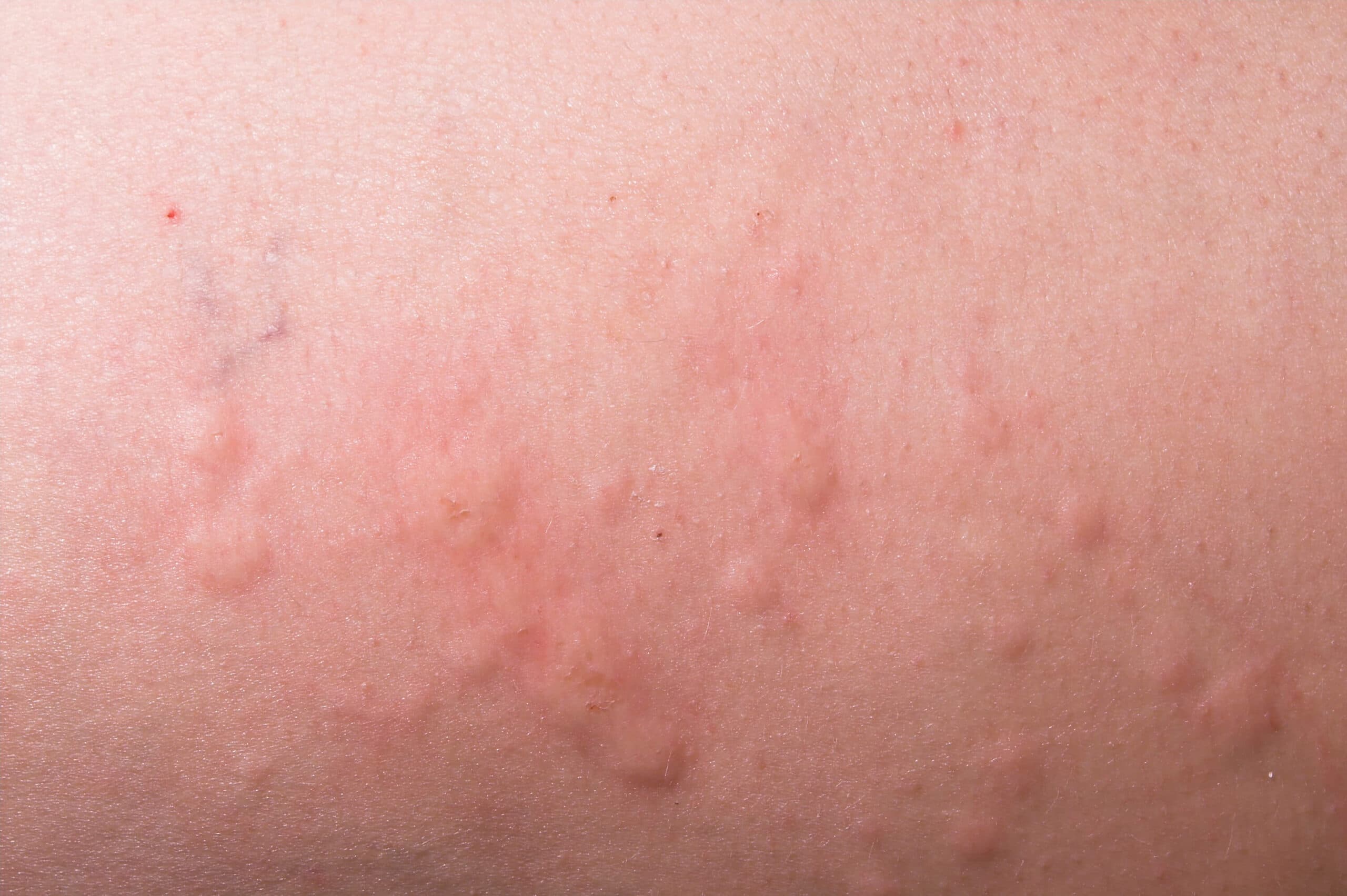
Raised, red or skin-coloured wheals caused by mast cell degranulation and histamine release. Can be acute (under 6 weeks) or chronic (over 6 weeks). Triggers include foods, medications, infections, and physical factors — though in many cases no trigger is found.
Allergic Contact Dermatitis
A Type IV delayed hypersensitivity reaction to a specific allergen — nickel, rubber, cosmetic ingredients, plants, or topical medications. Characterised by itching, redness, vesicles, and oozing at the contact site, appearing 24–72 hours after exposure.
Irritant Contact Dermatitis
Non-immunological skin damage from direct contact with irritant chemicals, detergents, solvents, or repeated water exposure. Presents as dryness, cracking, and redness — most common in housewives, healthcare workers, and those with frequent hand washing.
Common Symptoms
Urticaria (hives) — raised, red or skin-coloured wheals that appear suddenly and may be intensely itchy
Wheals that shift location — appearing, disappearing, and reappearing at different skin sites within hours
Angioedema — deeper swelling under the skin, particularly around eyes, lips, hands, and feet
Contact dermatitis — redness, itching, vesicles, and oozing at the site of contact with an allergen or irritant
Burning or stinging sensation alongside itching
Symptoms that worsen with heat, exercise, stress, or particular foods
Chronic urticaria — episodes lasting more than 6 weeks, often without an identifiable trigger
Skin that becomes red and inflamed after pressure, rubbing, or cold exposure (physical urticaria)
Accompanying symptoms — sneezing, watering eyes, or mild breathlessness in hypersensitive individuals
Post-allergic skin darkening or thickening from repeated scratching
Recurrence at the same sites following re-exposure to triggering agents
Benefits of Homeopathy for Skin Allergy
Reduces Allergic Hypersensitivity
Constitutional homeopathy addresses the immune dysregulation underlying allergic skin conditions — gradually reducing the intensity and frequency of reactions rather than merely suppressing symptoms with antihistamines.
Safe for Long-Term Use
Unlike antihistamines or corticosteroids, homeopathic remedies can be taken long-term without the side effects of sedation, weight gain, skin thinning, or adrenal suppression.
Treats Both Acute and Chronic Urticaria
Acute urticaria episodes can be managed alongside conventional antihistamines, while constitutional treatment targets the chronic tendency to recurrent hypersensitivity reactions.
Addresses the Individual Allergic Pattern
Each person's allergy has a unique pattern — triggered by specific foods, seasons, stresses, or physical stimuli. Constitutional homeopathy selects remedies based on this individual pattern, not a generic protocol.
Concurrent Management of Co-Morbid Allergies
Skin allergies frequently co-exist with hay fever, asthma, and food allergies. Constitutional treatment addresses the systemic atopic tendency, potentially benefiting all allergic conditions simultaneously.
Supports Reduction of Antihistamine Dependence
Many patients with chronic urticaria rely on daily antihistamines. Constitutional treatment, over time, may allow gradual reduction of antihistamine use in consultation with the prescribing doctor.
Our Homeopathic Approach
Comprehensive Allergy History
Dr. Thakur documents the full history of allergic episodes — onset age, identified triggers, seasonal patterns, previous investigations, and current and past medications. The pattern of hypersensitivity is as important as the individual symptoms.
Identifying Trigger Patterns and Miasmatic Background
Whether the allergy is triggered by food, contact, physical stimuli, or stress — and whether it is associated with a family history of atopy — guides the constitutional and anti-miasmatic remedy selection.
Constitutional Remedy Prescription
The remedy addresses the individual's immune hypersensitivity pattern, skin reactivity, and overall constitutional state — not just the most recent allergic episode.
Trigger Identification and Avoidance Guidance
Where triggers can be identified, practical guidance on avoidance is provided. For idiopathic chronic urticaria where triggers cannot be reliably identified, the constitutional approach is the primary strategy.
Graduated Follow-Up and Adjustment
Follow-up consultations at 4–6 week intervals monitor the frequency and severity of reactions. The remedy is adjusted as the allergic pattern evolves and as the immune response gradually normalises.
Frequently Asked Questions
Can I stop my antihistamines when I start homeopathic treatment?▾
No — continue prescribed antihistamines as directed by your doctor. Homeopathic treatment works alongside conventional medication. Any reduction in antihistamines should only occur gradually and in consultation with your prescribing doctor as symptoms improve.
What is the difference between urticaria and contact dermatitis?▾
Urticaria (hives) is an immune-mediated reaction producing wheals anywhere on the body — often without direct contact with the trigger. Contact dermatitis is a localised skin reaction at the site of contact with an allergen (allergic) or irritant (irritant). Both respond to constitutional homeopathy, though the approach differs.
Can homeopathy help with chronic idiopathic urticaria where no trigger is found?▾
Yes — chronic idiopathic urticaria (where no trigger can be identified despite investigation) is one of the conditions that responds particularly well to constitutional homeopathy. The treatment addresses the immune dysregulation rather than requiring a specific identified trigger.
How long does it take for skin allergy to improve with homeopathy?▾
Acute episodes may be helped within days. Reducing the underlying hypersensitivity — so that reactions are less frequent, less intense, and more easily controlled — typically takes 4–9 months of consistent constitutional treatment.
I have had allergy tests but they came back negative. Can homeopathy still help?▾
Yes. Many patients with significant allergic symptoms have negative standard allergy panels. The allergic predisposition and skin reactivity can be treated constitutionally regardless of specific test findings.
Is homeopathy suitable for children with skin allergies?▾
Yes — constitutional homeopathy is safe and effective for children with urticaria and contact dermatitis, and is particularly suitable given the limitations on long-term antihistamine use in younger patients.
Patient Stories
"I had chronic urticaria for three years — hives appearing daily for no apparent reason. I was on two antihistamines and still breaking out. After eight months of constitutional treatment, I now have reactions only occasionally, and they are much milder. I have been able to cut one antihistamine completely with my doctor's guidance."
✓ Chronic urticaria significantly reduced; antihistamine use halved
Deepika R., Hadapsar
8 months"Contact dermatitis from nickel in belts and watches had been bothering me for years. The constitutional treatment reduced my reactivity so much that I can now occasionally wear a watch without an immediate reaction — something I couldn't do before."
✓ Contact dermatitis reactivity significantly reduced
Arjun V., Magarpatta
4 monthsWhat to Inform Your Doctor
- 1
Age at onset of allergic skin condition and any identifiable triggers at the time it started
- 2
Known triggers — foods, plants, metals, cosmetics, fabrics, medications, animal dander, or physical factors
- 3
Pattern of episodes — frequency, duration, body sites affected, and time of day or season
- 4
Family history of allergies — eczema, asthma, hay fever, or food allergies
- 5
Results of any allergy tests — skin prick tests, patch tests, or specific IgE blood tests
- 6
Current medications — antihistamines, corticosteroids, immunosuppressants, and any previous desensitisation therapy
- 7
Co-existing allergic conditions — asthma, hay fever, food allergies, or eczema
- 8
Any association between episodes and stress, exercise, heat, cold, or pressure
- 9
Dietary patterns and any previous elimination diets attempted
- 10
History of anaphylaxis or any severe allergic reactions requiring emergency treatment
Preparing for Your Appointment
Keep an Allergy Diary
For 1–2 weeks before your appointment, note when reactions occur, what you ate, what you touched, and environmental exposures. Patterns often emerge that were not previously obvious.
Bring Allergy Test Results
If you have had skin prick tests, patch tests, or blood allergy panels, bring the reports. If not, Dr. Thakur may recommend testing.
List All Current Medications
Include antihistamines, corticosteroid creams, and any other treatments — names, doses, and how effective they have been.
Photograph Active Reactions
A photograph of a skin reaction during a flare — showing the distribution, appearance, and extent — is extremely helpful for case analysis.
Note Previous Treatments
Which antihistamines have you tried? Have you had a course of corticosteroids? What worked, what did not, and what side effects did you experience?
Allow 60 Minutes
Allergy cases require a thorough constitutional and exposure history. Plan for a complete, unhurried first consultation.
Ready to start your healing journey?
Book your consultation with Dr. Meera Thakur at HealthKunj Clinics, Pune.
Book Your ConsultationTwo ways to consult for Allergy (Skin)
Dr. Meera Thakur sees patients in person at our Kharadi clinic in Pune, and online by video anywhere in India.
In-clinic — Kharadi, Pune
First Floor, Blue Berry Society, 4, Blue Berry Rd, Tulaja Bhawani Nagar, Kharadi, Pune, Maharashtra 411014
Mon–Sat: 10:30 AM – 2:00 PM & 5:30 PM – 8:30 PM · Sunday: Closed
Skin Allergy homeopathy treatment in PuneBook a clinic visitOnline — anywhere in India
A video consultation with the same detailed case-taking as an in-clinic visit. Medicines are couriered to your address.
Book an online consultation