
Skin Condition
Pityriasis Rosea & Versicolor

BHMS — Classical Homeopathic PhysicianPublished 15 Mar 2026· Updated 1 Aug 2026
Gentle homeopathic treatment to resolve skin patches, restore pigmentation, and prevent seasonal recurrence — without antifungals or steroids.
Overview
Pityriasis encompasses two distinct but often confused skin conditions: Pityriasis Rosea — a self-limiting inflammatory rash — and Pityriasis Versicolor (also called Tinea Versicolor) — a chronic fungal overgrowth on the skin surface. Both cause characteristic patches on the trunk, neck, and upper arms, but their causes, recurrence patterns, and long-term management differ significantly.
At HealthKunj, Dr. Meera Thakur addresses both conditions through classical homeopathy, targeting the underlying immune susceptibility that allows either condition to persist or recur. Rather than repeatedly suppressing the skin manifestation, our approach strengthens the body's inherent regulatory mechanisms so that the skin environment no longer supports disease recurrence.
6–8 wks
Typical rosea resolution with homeopathy
3–6 mo
Constitutional treatment duration for versicolor
98%
Patient satisfaction at HealthKunj
What Is It?
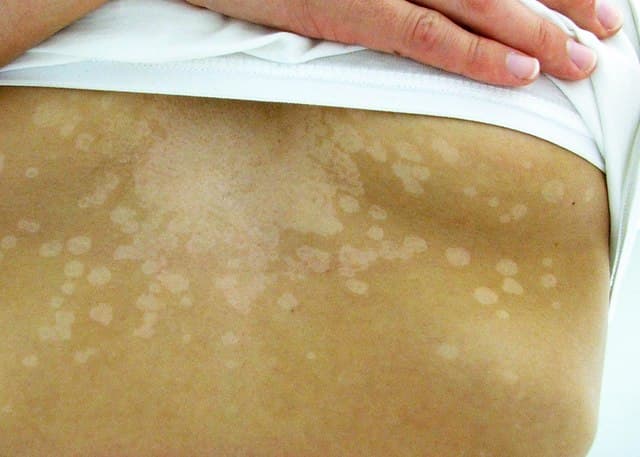
Pityriasis covers two separate skin phenomena. Rosea appears suddenly with a distinctive herald patch followed by a salmon-coloured rash in a Christmas tree pattern on the torso. Versicolor is caused by the overgrowth of Malassezia — a yeast naturally present on skin — producing hypopigmented or hyperpigmented patches that become most visible in summer when surrounding skin tans but patches do not.
Pityriasis Rosea
An acute, self-limiting rash believed to involve reactivation of human herpesvirus 6 or 7. It begins with a large herald patch then spreads in a tree-like pattern over 2–6 weeks before spontaneously resolving over 6–12 weeks.
Pityriasis Versicolor
A chronic superficial fungal condition caused by Malassezia overgrowth. Warm, humid conditions and oily skin promote its growth. It causes patches that fail to tan and has a high recurrence rate without addressing the underlying susceptibility.
Homeopathic Perspective
Both conditions reflect a disordered skin immunity. Homeopathy treats the constitutional tendency — the internal milieu that allows either viral reactivation (rosea) or fungal dominance (versicolor) — rather than targeting the pathogen alone.
Common Symptoms
Herald patch — a single large oval scaly spot appearing before rash
Christmas tree pattern of oval scaly patches on the trunk
Mild to moderate itching, worsening with heat
Light or dark patches on chest, back, neck, and upper arms
Patches that do not tan in sunlight (hypopigmentation)
Flaking or fine scale on the edges of lesions
Mild fatigue or low-grade fever before eruption (in rosea)
Patches returning in warm, humid weather (versicolor)
Pale or pinkish discoloration persisting after treatment
Skin sensitivity to heat and sweating
Benefits of Homeopathy for Pityriasis
Addresses Root Susceptibility
Homeopathy treats the immune and constitutional tendency that allows pityriasis to recur, not just the surface patches.
No Antifungal Side Effects
Classical remedies work without the liver-related side effects associated with prolonged antifungal medications used in versicolor.
Restores Normal Pigmentation
Remedies selected for pigmentation disorders help melanocytes recover gradually, restoring skin colour naturally.
Reduces Itch Intensity
Targeted homeopathic prescribing relieves the irritating itch and heat sensation in affected patches within weeks.
Prevents Seasonal Recurrence
Constitutional treatment strengthens the skin's microbiome defense so that warm-weather flares become less frequent and less severe.
Safe for All Age Groups
From teenagers with versicolor to adults with rosea, homeopathic remedies carry no systemic toxicity and are suitable for long-term use.
Our Homeopathic Approach
Detailed Skin & Lifestyle Assessment
Dr. Meera records the pattern, distribution, colour, and duration of patches alongside sweating habits, diet, stress levels, and past skin history to distinguish rosea from versicolor clinically.
Constitutional Remedy Selection
Remedies such as Arsenicum Album, Sepia, Tellurium, Bacillinum, and Phosphorus are evaluated based on the patient's complete symptom picture — not just the skin lesion.
Potency & Dose Calibration
The appropriate potency is chosen based on sensitivity, chronicity, and previous treatments. Acute flares may require low frequent doses while constitutional treatment uses higher potencies at intervals.
Diet & Triggering Factor Guidance
Patients receive personalised advice on avoiding triggers such as excessive heat, occlusive clothing, and dietary factors that promote Malassezia overgrowth in versicolor cases.
Follow-Up & Pigmentation Monitoring
Skin colour restoration is tracked over three to six months. Remedies are adjusted as the patch pattern evolves and the patient's overall vitality improves.
Frequently Asked Questions
Is pityriasis rosea contagious?▾
No. Pityriasis rosea is not contagious. It is believed to be triggered by a viral reactivation (HHV-6 or HHV-7) in susceptible individuals and resolves on its own, though homeopathy can significantly hasten recovery and reduce discomfort.
How is pityriasis versicolor different from rosea?▾
Pityriasis rosea is a self-limiting inflammatory rash with a herald patch, while pityriasis versicolor (tinea versicolor) is a fungal overgrowth of Malassezia on the skin causing hypopigmented or hyperpigmented patches, especially on the trunk. Both respond well to homeopathic treatment.
How long does homeopathic treatment take?▾
Pityriasis rosea often resolves in 6–10 weeks naturally; homeopathy can reduce this to 3–5 weeks with faster itch relief. Versicolor requires 3–6 months of constitutional treatment for pigmentation normalisation and to prevent recurrence.
Will the white patches from versicolor fill in with treatment?▾
Yes. Once the Malassezia overgrowth is controlled and the skin's immune response is normalised through constitutional homeopathy, melanocytes gradually resume normal pigment production. This process takes time and requires sun exposure alongside treatment.
Can I continue my current antifungal cream during homeopathic treatment?▾
Yes, for versicolor cases we typically continue topical antifungals for the initial phase while homeopathic treatment addresses the underlying susceptibility. Dr. Meera will guide you on phasing out topical agents as the condition stabilises.
Does diet affect pityriasis versicolor?▾
Yes. High-sugar diets, excess refined carbohydrates, and heavy sweating provide conditions that favour Malassezia growth. We advise a balanced diet low in refined sugars and adequate hydration as part of an integrated management plan.
Patient Stories
"I had those stubborn white patches on my chest and back for three summers. Creams would clear them temporarily but they always returned after monsoon. Dr. Meera's treatment over four months has kept my skin clear for almost a year now. The difference is incredible."
✓ Versicolor cleared after 4 months; no recurrence after 11 months
Aditi Kulkarni
Treated Oct–Jan"The Christmas tree rash on my back was so itchy and embarrassing. My dermatologist said it would resolve in 8 weeks but the itch was unbearable. Homeopathic treatment at HealthKunj gave me relief within 2 weeks and the rash faded much faster than expected."
✓ Rosea resolved in 4 weeks with complete itch relief by week 2
Rohan Shinde
Treated Apr–JunWhat to Inform Your Doctor
- 1
When the first patch appeared and whether a larger herald patch preceded the rash
- 2
Whether patches are lighter or darker than surrounding skin, and if they tan differently
- 3
Any recent viral illness, fever, or fatigue before the skin eruption
- 4
Sweating patterns — whether you sweat excessively and where patches worsen
- 5
All topical and oral treatments tried so far including antifungals and steroid creams
- 6
History of similar patches in past summers or after travel
- 7
Any other family members with similar skin complaints
- 8
Dietary habits, especially sugar intake, dairy consumption, and water intake
- 9
Occupation and clothing habits — tight synthetic clothing increases risk of versicolor
Preparing for Your Appointment
Photograph All Patches
Take clear photos in natural daylight of all affected areas including any herald patch or areas of colour change for accurate mapping.
Timeline of Appearance
Note the exact date patches appeared, their initial colour, and how they have changed or spread over time.
List All Skin Products Used
Bring or note all soaps, creams, shampoos, and antifungal treatments used on the affected areas and their effect.
Carry Lab Reports if Any
If a KOH scraping or skin biopsy was done, bring the report as it confirms versicolor diagnosis and helps refine treatment.
Note Seasonal Patterns
Observe and record which season triggers or worsens patches — summer heat, monsoon humidity, or post-travel episodes.
Write Itch & Sensation Details
Note what worsens the itch — heat, sweat, tight clothing — and what provides relief, as these modalities guide remedy selection.
Ready to start your healing journey?
Book your consultation with Dr. Meera Thakur at HealthKunj Clinics, Pune.
Book Your Consultation